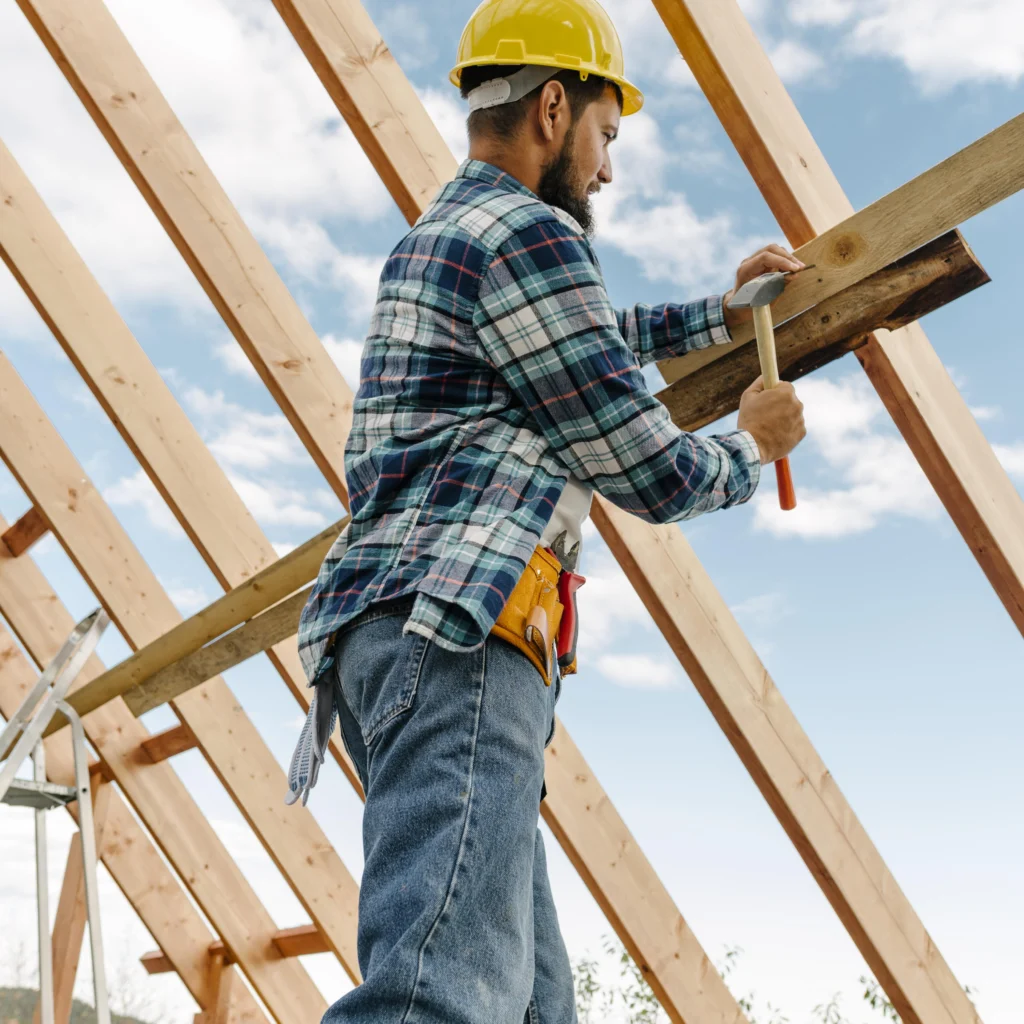
construction-worker-with-hard-hat-building-roof-house

Smart Home Integration for Your Remodel in San Jose | Benefits & Expert Tips

Smart Home Integration For Your Remodel: Why Now is the Perfect Time to Get Smarter

Okay, let’s be real. Planning a remodel? It’s exciting, a bit overwhelming, and honestly, sometimes feels like you’re juggling chainsaws. You’re picking tiles, arguing about paint swatches, and wondering if that open-concept kitchen is really worth the dust storm. But here’s the thing we see folks miss all the time: your remodel is the golden ticket to a truly smart home. Seriously, trying to retrofit smart tech after the drywall is up? That’s like trying to add sprinklers after the lawn is on fire. Major hassle, extra cost, and way more dust (trust us, we’ve seen it).
Smart Home Integration For Your Remodel

We’re D&D Home Remodeling, your friendly neighborhood San Jose experts who’ve been knee-deep in drywall dust and smart home wiring for years. We live for transforming houses in San Jose, Santa Clara, Campbell, Milpitas, Saratoga, Sunnyvale, Los Gatos, Cupertino, Fremont, and Morgan Hill. And we’re here to tell you: weaving smart tech into your general remodeling, bathroom remodeler project, full home remodel, or even home additions isn’t just cool – it’s downright smart planning. Why do it later when the walls are open now? Let’s dive in.

Why Burying Wires Beats Sticking Things On Walls Later

Think about it. What’s the biggest pain with adding smart stuff after the fact? Running wires! Fishing cables through finished walls is a nightmare – it’s messy, time-consuming, and can leave you patching holes bigger than your initial vision. During a remodel? The walls are already open! It’s like having the hood of your car up – perfect timing to upgrade the engine.

  • Future-Proofing is King (or Queen): We can easily run extra conduit (fancy word for protected pathways for wires) to places you might want tech later – think behind the bathroom mirror for that future smart display, or above the patio for outdoor speakers. This makes future upgrades abortable in the sense that you can easily change course without massive demolition. No more “I wish we’d thought of that!”
  • Seamless Integration: Want invisible in-ceiling speakers? Recessed smart lighting controls? Hidden motorized blinds? Doing it during the renovation contractor phase means everything looks custom-built, not like an afterthought glued to the wall. It just looks cleaner.
  • Centralized Power & Networking: A proper smart home needs a brain (a hub) and a strong nervous system (networking). During a remodel, we can strategically place network switches, plan for robust Wi-Fi mesh nodes with wired backhaul (way better than wireless!), and ensure critical devices have dedicated power. No more dead zones or gadgets dying because they stole a phone charger spot.

Pro-Tip: Ever get frustrated yelling at a smart speaker that can’t hear you over the AC? We can pre-wire for microphones and speakers in optimal locations during the rough-in stage. Just saying.

Where Smart Tech Shines in Your Remodel: Beyond Just Yelling at the Lights

So, where does this smart magic actually go? Pretty much everywhere! Let’s break down some key zones:

Your Command Center: The Living Room & Kitchen

  • Lighting: Ditch the clunky old switches. We install smart switches or dimmers that work with your voice, phone, or schedules. Imagine “Movie Night” dimming the lights automatically. Bliss.
  • Climate Control: Smart thermostats are great, but integrating them seamlessly during a remodel means optimal sensor placement and even smart vents for zoned comfort. No more freezing in the bedroom while the living room roasts.
  • Entertainment: Pre-wire for surround sound, hide those speaker wires, install a central AV closet. Control your TV, soundbar, and streaming with one remote (or your voice). FYI, this is way easier when the walls are open.
  • Shades & Blinds: Motorized blinds integrated during window replacement or framing? Yes, please. Set them to open with the sunrise or close when it gets too hot. Pure luxury.

The Oasis: Bathrooms

Working with a bathroom remodeler? Don’t overlook smart potential!

  • Smart Showers: Set your perfect temperature and flow before you even step in. No more shock therapy from cold water!
  • Voice-Activated Everything: Control lights, fans, music, or even fill the tub hands-free. Super handy when you’re, well, busy.
  • Leak Sensors: Hidden behind toilets or under sinks during install. Get instant alerts on your phone if a pipe bursts before it becomes a swimming pool in your hallway. Peace of mind = priceless.

The Great Outdoors: Exterior Remodeling & Security

Thinking about exterior remodeling? Perfect time to boost security and convenience.

  • Smart Lighting: Path lights, floodlights, and deck lighting on schedules or motion sensors. Welcome home to a well-lit path, deter unwanted guests.
  • Security Cameras & Doorbells: Pre-wire for power and data (PoE cameras are rock solid) during siding work or soffit framing. Get crystal-clear feeds without worrying about Wi-Fi strength or battery life. IMO, wired is always better if you can.
  • Smart Irrigation: Integrate with weather data during landscaping. Save water and keep your lawn green automatically.

Smart Home Systems: The Brains of the Operation (A Quick Comparison)

Choosing a platform can feel overwhelming. Here’s a super simplified snapshot of the big players to get you started. Remember, we can help tailor this to your specific needs during planning!

Feature Apple HomeKit Google Home Amazon Alexa Samsung SmartThings / Matter
Core Strength Privacy, Apple Ecosystem Integration Powerful Assistant, Broad Compatibility Vastest Device & Skill Library Flexibility, Strong Automation, Matter Hub
Best For iPhone/Mac/iPad Users, Privacy Focused Android Users, Google Service Users Broad Device Support, Voice Shopping Fans Tech Tinkerers, Complex Automations
Setup Complexity Moderate (Requires Home Hub like Apple TV/HomePod) Easy Easy Moderate to Complex
Voice Assistant Siri Google Assistant Alexa Bixby (or integrates with others)
Key Consideration Device selection slightly smaller (but growing) Data privacy concerns for some Privacy concerns for some, Ads via devices? :/ Can integrate with almost anything
Our IMO (Use Case) Seamless Apple life? Perfect. “Hey Google” feels natural? Go for it. Want the most compatible gadgets? Alexa wins. Want ultimate control & future-proofing? Strong contender.

Let’s Talk Money: Smart Integration Cost & Value

Okay, the elephant in the room: cost. “How much is this smart wizardry going to add to my price?” It’s a fair question. The answer? “It depends.” Like any home remodeling services, costs vary wildly based on:

  • Scope: Are you doing a few smart switches or a whole-home automation system with motorized blinds and multi-room audio?
  • Product Choice: High-end Lutron vs. budget-friendly options? Sonos vs. basic in-ceiling speakers?
  • Labor: Running wires during rough-in is significantly cheaper than retrofitting.

Here’s the key takeaway: Integrating during your remodel often saves you money long-term. Think about it:

  • No Retrofit Costs: Avoid the high labor fees of opening walls later.
  • Bundled Labor: Your general contractor (like us at D&D!) is already managing the project. Adding smart wiring coordination is efficient.
  • Increased Home Value: Smart features are a legit selling point. Buyers love move-in-ready tech.
  • Energy Savings: Smart thermostats, lighting, and irrigation can significantly cut utility bills. They pay for themselves!

Don’t Panic: You don’t need to do it all at once. A good house remodeling contractor will help you plan the essential wiring now (the skeleton) so you can add the gadgets (the muscles and skin) later as your budget allows. This phased approach makes the cost much more manageable.

Why Your Contractor Choice Makes ALL the Difference

Not every general remodeling crew gets smart homes. Seriously. You need a team that understands both the hammer and the hub. Trying to coordinate low-voltage wiring (data, audio, security) with high-voltage (plugs, lights) and plumbing requires serious planning and communication. One misstep can mean your smart switch location blocks the plumbing access panel. Oops.

This is where finding the best remodeling company matters. You want someone who:

  • Has Smart Home Experience: Ask specifically! Have they wired for smart lighting, distributed audio, or security systems before?
  • Offers Integrated Design: They should involve low-voltage specialists early in the design phase alongside the carpenters and electricians.
  • Communicates Clearly: They explain options, cost implications, and the process without drowning you in jargon.
  • Understands Local Needs: We know the specific quirks of homes in San Jose, Sunnyvale, Cupertino, Los Gatos, and surrounding areas – from older construction challenges to modern builds.

Shameless Plug (But Earned!): At D&D Home Remodeling in San Jose, smart home integration isn’t an afterthought; it’s baked into our planning process. We work with trusted low-voltage partners (or guide you if you have your own) to ensure everything from your bathroom remodeler tile choices to your exterior remodeling lighting plan factors in the tech. We make it seamless. Why juggle multiple contractors when you can have one best remodeling company team handle it all? Give us a shout – let’s make your remodel brilliantly smart. 🙂

Your Smart Home Remodel Questions, Answered (FAQs)

Q1: Won’t smart tech become obsolete super fast? Should I even bother?
A: Great question! While specific gadgets might get updates, the infrastructure (wires, conduit, network backbone) you install during the remodel is the key. We focus on installing high-quality, standard wiring (Cat6, speaker wire, conduit) that will support devices for years, even as the gadgets themselves evolve. Think of it like plumbing pipes – the pipes last decades, you just update the faucet. Planning the infrastructure now future-proofs your home.

Q2: How much extra time does adding smart wiring really add to my remodel schedule?
A: Surprisingly little when planned upfront! The critical wiring happens during the “rough-in” phase (after framing, before drywall). Coordinating this with the electrician and plumber is key. A good general contractor like our team at D&D builds this coordination into the schedule. Adding a few extra data lines or speaker wires might add a day or two, compared to weeks of disruption for a retrofit later. It’s a tiny time investment for massive long-term gain.

Q3: I’m overwhelmed by all the brands and platforms (Apple, Google, Alexa…). How do I choose?
A: Totally understandable! Our best advice:

  1. Think Ecosystem: What phones/tablets/computers do you already use daily? Sticking with that ecosystem often gives the smoothest experience.
  2. Focus on Key Needs: What do you really want to automate? Lighting? Security? Entertainment? Start there; you don’t need everything.
  3. Prioritize “Matter”: Look for devices supporting the new Matter standard. This ensures better compatibility between different brands in the future. We can advise on this during planning.
    Don’t stress about picking the “perfect” one forever. A well-wired home gives you flexibility to change platforms later!

Q4: Can I add some smart features myself later, even if I get the wiring done now?
A: Absolutely! That’s one of the biggest benefits of doing the wiring during the remodel. We install the necessary wires and boxes (like deep electrical boxes for smart switches, speaker terminals, network jacks). Later, you (or an installer) can easily:

  • Swap a dumb switch for a smart one.
  • Plug speakers into pre-wired terminals.
  • Connect cameras to pre-run network cables.
  • Add sensors where we placed wiring pathways.
    It becomes a simple plug-and-play upgrade, not a major construction project. That’s the beauty of planning ahead!

Wrapping It Up: Get Smart, Do It Right

So, there you have it. Ignoring smart home tech during your remodel? That’s like buying a sports car and skipping the engine upgrade. Sure, it’ll get you there, but think of the potential you’re missing! The convenience, security, energy savings, and sheer cool factor are undeniable.

By integrating smart features while the pros are already working, you save money, avoid future headaches, and get a seamlessly polished result that looks like it was always meant to be. It’s not about having a spaceship (unless you want that!), it’s about making your daily life smoother and your home more responsive to you.

Ready to make your San Jose, Campbell, Fremont, or anywhere in the South Bay remodel brilliantly smart? Don’t just search for a “remodeling contractor near me” – find one who gets the big picture. We’re D&D Home Remodeling, and we’re passionate about building beautiful, functional, and intelligent homes. Let’s chat about your vision. We promise, it’s way more fun than arguing about grout color. Give us a call – let’s build something smarter together!

Sunnyvale's Trusted Home Remodeling Experts | D&D Home Remodeling

San Jose Bathroom Layout Ideas: Expert Designs, Code-Compliant Plans, and the Local Guide to a Modern Remodel

The most effective bathroom layouts for modern San Jose homes in 2026 prioritize open floor plans, universal design, and strict California energy and water codes. A three-quarter bath with a walk-in shower and floating vanity remains the top choice for guest and ADU spaces, while master suites gain the most value from a wet room configuration or a separated water closet and freestanding tub. Regardless of size, every layout must meet 30-by-30-inch minimum clear floor space outside fixtures, 60-inch turnaround diameter for wheelchair access, and a Title 24-compliant high-efficacy ventilation and lighting plan. Realistic budgets for a full San Jose bathroom remodel run from 35,000 dollars for a cosmetic update to 85,000 dollars or more for a luxury build-out with structural changes. Partnering with a design-build firm like D&D Home Remodeling ensures your layout meets all California Building Code requirements while maximizing the unique character of your Santa Clara County home.

The 2026 San Jose Bathroom: What “Modern” Means Right Now

A modern bathroom in San Jose is no longer just about clean lines and white subway tile. It is a highly engineered, sustainable, and health-centric space designed to handle the realities of Silicon Valley life: aging homeowners, multi-generational living, accessory dwelling units, and an intense focus on resale value. Layout choices must balance California’s two-decade drought cycle, seismic safety, and Title 24 energy standards with the desire for spa-like retreats.

Key drivers shaping 2026 bathroom layouts across San Jose, Campbell, Saratoga, and Los Gatos include:

  • Micro-split zoning: Clearly defined wet, dry, and grooming zones even in rooms under 70 square feet.

  • Universal design as standard: Curbless showers, 36-inch-wide doors, blocking for future grab bars.

  • Smart water management: Touchless faucets with WaterSense labels, smart leak detectors integrated into the main water line.

  • Electrification: Heat pump water heater pre-wiring, radiant floor heating, and bidet seats with instant water heating.

  • Seamless indoor-outdoor flow: Clerestory windows and skylights that meet San Jose’s energy code while borrowing light from the outside.

Space Planning Rules Every San Jose Homeowner Must Know

Before selecting a layout, the governing clearances from the California Building Code (CBC, based on the 2025 IBC) and NKBA planning guidelines set hard boundaries. San Jose enforces these with no exceptions for non-structural remodels unless the existing footprint leaves no other option. The following table summarizes the critical dimensions you will discuss with your designer during the first site walk.

Clearance Dimension Minimum Requirement 2026 Best Practice for Modern Homes
Centerline of toilet to side wall/obstruction 15 inches (18 inches NKBA recommended) 20 inches for comfort and future grab bar clearance
Clear floor space in front of toilet 24 inches 30 inches, with a 48-inch depth for aging-in-place
Shower interior dimension 30 x 30 inches (900 square inches interior) 36 x 48 inches or larger; 42 x 60 inches for a linear drain curbless entry
Vanity front clearance 30 inches deep x width of vanity 36 inches deep for two-person use
Turning radius inside bathroom None for non-accessible, 60-inch circle for ADA 60-inch diameter preferred in master and hall baths for walker/turnaround
Doorway width 32 inches clear 36 inches clear for universal access
Ceiling height over fixtures 80 inches minimum 96 inches to accommodate high-output LED rain heads and steam units

Sources: California Building Standards Commission (2025 CBC), National Kitchen & Bath Association Planning Guidelines, San Jose Building Division local amendments.

Top 5 Bathroom Layout Templates for San Jose Homes

These layouts are designed to fit the typical structural bays of San Jose’s post-1950 ranchers, 1970s two-story homes, and the new ADU builds dominating the South Bay.

1. The Three-Quarter Bath with Back-to-Back Plumbing (Ideal for ADUs and Guest Suites)

  • Footprint: 5 feet by 9 feet, 45 square feet.

  • Layout: Single-sink vanity on one short wall, toilet adjacent on the long wall, and a 36 x 48 inch walk-in shower at the far short wall.

  • Why it works: All wet fixtures share a single 2 x 6 wet wall, slashing plumbing rough-in costs by up to 30 percent in San Jose’s high-labor market. The linear arrangement leaves a wide 36-inch central aisle.

  • Local advantage: Perfect for detached ADUs where San Jose’s ADU ordinance allows a 45-square-foot bathroom without planning commission review.

2. The Master Suite Split Wet Room

  • Footprint: 9 feet by 11 feet, 99 square feet.

  • Layout: Entrance door on a long wall opens to a central walkway. To the left, a 60-inch vanity with twin sinks. To the right, a separate water closet with pocket door. Straight ahead, a full-width wet room containing a freestanding soaking tub and a curbless shower with a single fixed-glass panel divider.

  • Why it works: The wet room confines moisture to one aerated zone, simplifying waterproofing and ventilation. The pocket door water closet permits one person to use the toilet while another showers or grooms without conflict.

  • Resale note: Homes in Saratoga and West San Jose with this layout consistently appraise 5 to 8 percent higher than those with compartmentalized master baths, according to local appraiser feedback from 2025.

3. The Zero-Threshold Family Hall Bath

  • Footprint: 7 feet by 8 feet, 56 square feet.

  • Layout: Entry from the hallway to a straight run of a 48-inch vanity with integrated sink, then a comfort-height elongated toilet, and finally a 34 x 60 inch deep curbless shower with linear drain against the back wall.

  • Why it works: The single-wall plumbing arrangement is cost-effective for a mid-range remodel (45,000 to 55,000 dollars). The zero-threshold entry means this bath serves toddlers, parents, and visiting grandparents without modification.

  • Code compliance: San Jose requires a 2-inch maximum vertical drop at a shower threshold for existing remodels; true zero-threshold designs require recessing the floor joists, which D&D Home Remodeling coordinates with structural engineers.

4. The Powder Room with Impact

  • Footprint: 4 feet by 6 feet, 24 square feet (minimum allowed by CBC for powder room).

  • Layout: Pocket door saves swing space. Wall-hung toilet with concealed carrier. Narrow 18-inch-deep floating vanity or wall-mounted basin. Decorative mirror and sconce lighting.

  • Modern upgrade: In 2026, San Jose homeowners are specifying high-pressure laminates that mimic Venetian plaster and adding a single bold wallcovering. The ceiling-mounted exhaust fan (80 CFM) and occupancy-sensor LED lighting comply with Title 24 even in this tiny footprint.

5. The Accessory Bath & Laundry Combo

  • Footprint: 6 feet by 10 feet, 60 square feet.

  • Layout: Stacked washer/dryer in a shallow closet on one short wall. Opposite, a 30-inch vanity. Toilet next to the laundry closet. Walk-in shower in the remaining corner.

  • Why it works: In 1,200-square-foot San Jose homes where space is at a premium, combining the laundry zone with a full bath eliminates the hallway laundry penalty. This layout is a marquee feature in four-bedroom homes in Campbell where a downstairs full bath is non-negotiable.

San Jose-Specific Permit and Code Triggers That Dictate Layout

Unlike some neighboring counties, Santa Clara County and the City of San Jose enforce plan check review for any bathroom remodel that alters the floor plan, moves plumbing drains, replaces the shower pan, or adds square footage. The following items directly shape layout decisions:

  • Shower pan replacement: Requires a curbless or compliant curb pan per CPC Section 411. If you convert a tub to a shower, the drain must increase to 2 inches under San Jose code.

  • Window or vent relocation: Title 24 Part 6 mandates that any new or altered bathroom have a mechanical exhaust fan (minimum 50 CFM intermittent or 20 CFM continuous) that operates automatically with a humidistat or occupancy sensor and is HERS-verified.

  • Lighting power density: A completely remodeled bathroom may not exceed 0.6 watts per square foot for lighting. LED fixtures with high color rendering index (CRI 90+) are the default choice.

  • Low-flow fixtures: All showerheads must have a maximum flow rate of 1.8 GPM, bathroom faucets 1.2 GPM, and toilets 1.28 GPF or dual-flush 0.8/1.28 GPF, as per CalGreen 2025 mandatory measures.

Working with a licensed contractor like D&D Home Remodeling (CA License #1128719) ensures these triggers are identified during the in-house 3D visualization phase, not during a costly correction order.

Smart, Sustainable, and Durable: The 2026 Materials and Fixtures Spec

Selecting finishes that align with modern San Jose layouts means thinking about longevity, water resistance, and embedded technology. The following table matches common surfaces with their 2026 cost, durability, and best-use context for South Bay homes.

Material Installed Cost Range (per sq. ft.) in dollars Durability Score (1-5) Best Layout Context
Porcelain slab (large format) 25 – 45 dollars 5 Wet room walls, zero-grout-line showers
Engineered quartz vanity top 75 – 150 dollars (per linear foot) 4.5 Vanity surfaces in master baths
Luxury vinyl plank (LVT) 7 – 14 dollars 4 Secondary bath floors, not showers
Natural stone (marble) 40 – 100 dollars 3 (requires sealing) Accent walls only; avoid in hard-water San Jose municipal supply areas
Solid surface (Corian) 45 – 75 dollars (per linear foot) 4 Integral sink bowls for universal design
Waterproof shower panel system 18 – 35 dollars (materials only) 5 All shower enclosures; reduces grout mold risk
Low-iron glass (for shower enclosures) 400 – 900 dollars per panel 4.5 Frameless wet room dividers and doorless entries

Smart faucet and toilet integration is becoming a must for 2026 home buyers in San Jose. Touchless faucets with pre-set temperatures, voice-controlled shower systems that recall user profiles, and self-cleaning toilets with UV-light sanitization are now standard in the upper-mid-range budget starting at 65,000 dollars for a master suite.

Lighting and Ventilation: The Technical Backbone of a Safe Layout

Title 24 California Energy Code governs every watt and CFM. A failing HERS test will prevent final sign-off on your San Jose bathroom. The table below shows the current compliance path for three bathroom types.

Bathroom Type Required Mechanical Ventilation Lighting Efficacy Requirement Additional Notes
Full bath (over 50 sq. ft.) 80 CFM intermittent, humidistat controlled, 0.3 sone or less 90% of lamps high efficacy (LED) Separate circuit for bathroom receptacles required; AFCI protection
Powder room 50 CFM intermittent, occupant sensor for lights 100% high efficacy LED Must not be on same circuit as bedroom outlets in San Jose
Master bathroom with steam shower 120 CFM dual-speed, with automatic 20-minute post-use run, make-up air may be needed 100% LED, CRI ≥ 90, 3000K-4000K HERS rater verification of fan airflow and duct leakage

Source: California Energy Commission 2025 Building Energy Efficiency Standards, which remain in effect through 2026.

Budget Breakdown: What Modern Bathroom Layouts Cost in San Jose in 2026

All costs are in dollars and reflect contracted design-build pricing in Santa Clara County, including materials, labor, permits, engineering, and project management.

Scope Level Layout Complexity Average Square Footage Total Project Cost (dollars)
Cosmetic Refresh No layout change, same fixture locations Up to 50 28,000 – 38,000
Mid-Range Full Remodel Reconfigured vanity and shower, non-structural 50 – 100 45,000 – 65,000
High-End Master Suite Structural work, wet room, curbless shower, moving drain stacks 100 – 150 75,000 – 110,000
ADU Bathroom New Construction All-new plumbing, electrical, ventilation 40 – 60 35,000 – 55,000
Universal Design Complete Gut Door widening, all accessible fixtures, roll-in shower, structural 70 – 120 60,000 – 95,000

Data compiled from D&D Home Remodeling project history 2024-2025 and RSMeans localized for San Jose, adjusted for 2026 labor forecast.

The D&D Home Remodeling Advantage for Your San Jose Bathroom Layout

A layout is only as strong as the team that executes it. D&D Home Remodeling is a family-owned, bonded, and insured general contractor (CA License #1128719) serving San Jose, Santa Clara County, and the greater Bay Area including Saratoga, Campbell, Los Gatos, and Santa Clara. The firm’s design-build model unifies in-house designers, dedicated project managers, and a seasoned construction crew under one roof. Their 3D visualization process allows you to walk through your proposed layout before a single stud is moved, catching clearance issues and code conflicts early. With over 100 completed bathroom remodels in the South Bay, the company has maintained a pristine 5.0 rating on Houzz and earned two Houzz Badges for service and design. Every bathroom they build meets CalGreen, Title 24, and San Jose local amendments, and their team handles the permit process from submittal to final inspection. For a free, no-obligation estimate on your modern bathroom layout, contact D&D Home Remodeling or call their San Jose office directly.

Frequently Asked Questions (FAQs)

What is the smallest legal bathroom size in San Jose?

The California Building Code allows a powder room with a toilet and sink at 24 square feet, but a full bathroom with a shower or tub requires enough floor area to maintain the required clearances: at minimum a 30-inch-diameter circle in front of each fixture. In practice, a 5 foot by 8 foot (40 square feet) full bathroom is the smallest workable layout that San Jose plan check will approve.

Do I need a permit to move my toilet to a different wall?

Yes. Relocating a toilet drain line is a plumbing alteration that requires a San Jose building permit and a plan check review. The work must comply with the California Plumbing Code, which mandates a 3-inch drain line, a correct slope of 1/4 inch per foot, and proper venting. D&D Home Remodeling includes permit drawings and engineering coordination in every design-build contract, so a layout change never starts without the city’s approval.

How can I make my small San Jose bathroom feel larger without changing the footprint?

Three layout-specific strategies work in as little as 40 square feet: convert a tub to a curbless walk-in shower with a clear glass enclosure to extend the visible floor plane; install a wall-mounted floating vanity that exposes the floor beneath; and use a large-format mirror that spans the vanity wall. Adding a skylight or solar tube also brings in daylight without sacrificing wall space, complying with Title 24 if the shaft is insulated.

What is a curbless shower and is it possible in my San Jose home?

A curbless shower has a floor flush with the bathroom floor, eliminating any step-over. It is possible in most San Jose homes if the floor joists below the bathroom can be recessed or if a mortar bed can be dropped. For concrete slab-on-grade homes in Santa Clara, the slab must be cut and lowered in the shower area. D&D Home Remodeling partners with structural engineers to create a safe, waterproof recess that satisfies the CBC’s 2-inch drop requirement and San Jose building official expectations.

How long does a full bathroom remodel take in San Jose with a layout change?

From demolition to final inspection, a typical 75-square-foot bathroom with a reconfigured layout takes 6 to 8 weeks. If structural changes or slab work are required, add 2 to 3 weeks for engineering review and construction. D&D Home Remodeling schedules all trades under one roof, eliminating the multi-month gaps common with separate designer and contractor arrangements.

Are smart toilets and digital showers worth the investment for resale in San Jose?

In 2026, yes. Homebuyers in Saratoga, Cupertino, and West San Jose increasingly expect integrated bidet seats, temperature-controlled shower valves, and automatic ventilation. A mid-range master bath remodel at 55,000 to 70,000 dollars should allocate 2,000 to 4,000 dollars for a smart toilet and 1,500 to 3,000 dollars for a digital shower valve. These features differentiate a listing in a competitive market and typically yield a return on investment of 60 to 70 percent according to 2025 Houzz & Home data.

What is the best bathroom layout for aging in place in my existing San Jose home?

The ideal layout is a zero-threshold bathroom with a 60-inch turning circle, 36-inch-wide door, toilet centered in a 48-inch-wide alcove with blocking for grab bars on both sides, and a roll-in shower measuring at least 5 feet by 5 feet with a handheld wand on a slide bar. For San Jose homes where widening doors is structurally challenging, offset swing-clear hinges or pocket doors can achieve the required 32 to 36 inches of clear opening width. D&D Home Remodeling’s in-house certified aging-in-place specialists can design a phased plan that adds accessible features over time without paying for them all at once.

Ready to Finalize Your Modern San Jose Bathroom Layout?

A beautiful rendering is only the starting point. The best modern bathroom layout is one that lives within your home’s structural bay, sails through San Jose’s permit process, and fits your family for the next two decades. By engaging a full-service design-build team, you take the guesswork out of clearances, codes, and material choices. D&D Home Remodeling’s track record of 5.0 Houzz ratings and hundreds of finished South Bay bathrooms stands as proof that a seamless process and a stunning result are not mutually exclusive. Request your free, no-obligation estimate today and see your new floor plan in 3D before a single tool enters your home.

construction company - home extension

ADU Construction San Jose: The Complete 2026 Guide to Unlocking Your Property’s Potential

Building an Accessory Dwelling Unit (ADU) in San Jose represents one of the most strategic investments a Bay Area homeowner can make. With rental demand at historic highs and new state legislation making ADUs more accessible than ever, 2026 stands as an optimal time to add this valuable asset to your property.

This guide provides a comprehensive roadmap to ADU construction in San Jose, covering regulations, costs, permitting, ROI potential, and the critical decisions that separate successful projects from costly mistakes.


What Is an ADU and Why San Jose Homeowners Are Building Them

An Accessory Dwelling Unit is a fully self-contained secondary housing unit located on the same lot as a primary single-family residence. Unlike a simple room addition, an ADU includes its own kitchen, bathroom, sleeping area, and independent entrance, making it a legally rentable, fully functional home.

San Jose has emerged as one of California’s most ADU-friendly cities, thanks to progressive local policies and a clear recognition that these units offer a practical solution to the region’s housing shortage. Whether you are looking to generate rental income, create space for extended family, or increase your property’s long-term value, an ADU delivers tangible benefits that extend far beyond additional square footage.

The Four Primary ADU Types

Understanding which ADU configuration suits your property is the foundational step in planning. Each type carries distinct advantages in terms of cost, construction complexity, and design flexibility.

ADU Type Description Typical Cost Range Best For
Detached New Build Standalone structure in backyard, complete design freedom $250,000 – $450,000+ Properties with ample yard space, maximum privacy
Garage Conversion Transforming existing garage into living space $120,000 – $200,000 Cost-conscious homeowners with underutilized garages
Attached ADU Built onto side or back of existing home $150,000 – $300,000 Lots with limited yard space, cost savings on shared wall
Junior ADU (JADU) Converted space within existing home (max 500 sq ft) $40,000 – $150,000 Smaller budgets, multigenerational living setups
Above-Garage ADU New living space built atop existing garage $200,000 – $350,000 Properties with strong garage foundation, elevated views

Detached ADUs offer the greatest design flexibility and tenant privacy but carry the highest construction costs. Garage conversions represent the most cost-effective path to adding a rental unit, while attached ADUs provide a middle ground that balances cost with functionality.


2026 San Jose ADU Regulations: What You Must Know

California and San Jose have implemented significant regulatory changes that directly impact ADU feasibility, cost, and timeline. Understanding these rules before you begin can prevent costly redesigns and permit delays.

Key 2026 Regulatory Updates

Owner-Occupancy Requirement Eliminated

Under AB 976, effective January 1, 2026, owner-occupancy requirements for ADUs have been permanently eliminated. Homeowners may now rent out both their primary residence and their ADU without residing on the property. This change dramatically expands investment flexibility for those who may wish to move but retain the property as a rental asset.

Increased Height Allowances

San Jose has updated its zoning ordinance to permit two-story detached ADUs up to 25 feet in height in specific residential zones, an increase from the previous 24-foot limit. This change, driven by SB 1211, enables more spacious designs and better utilization of smaller lots.

Solar and Energy Requirements

Most new detached ADUs in San Jose must include solar panels and meet strict Title 24 energy standards. A typical ADU requires between 6 and 15 solar panels depending on unit size and energy consumption. Modern high-efficiency panels produce 370 to 450 watts each.

Impact Fee Exemption for Small ADUs

Under SB 543, ADUs and JADUs under 500 square feet of interior livable space are now exempt from developer fees, including certain school impact fees. This can translate to substantial savings during the permitting phase.

AB 1033: Condo Sales Now Permitted

San Jose has adopted AB 1033, which allows homeowners to sell their ADU separately from the primary residence as a condominium. This creates an entirely new exit strategy for ADU investors.

Utility Connection Timelines

SB 1196 establishes strict timelines for utility companies to provide service connections for ADUs. Contractors should reference SB 1196 timelines in initial PG&E applications to help prevent project delays.

San Jose ADU Size and Setback Requirements

Requirement Detached ADU Attached ADU JADU
Maximum Size 1,200 sq ft 50% of primary residence (min 850 sq ft for 1-bed under state law) 500 sq ft max
Minimum Size 150 sq ft Varies 150 sq ft
Height Limit 16 ft (single story), up to 25 ft with recent zoning update Same as primary dwelling N/A
Rear Setback 4 ft minimum Varies by zone N/A
Side Setback 4 ft minimum Varies by zone N/A

Detached ADUs are capped at 1,200 square feet, while attached ADUs must remain smaller than the primary residence. However, under California state ADU standards, attached ADUs must be allowed at least 850 square feet for a one-bedroom unit or 1,000 square feet for a two-bedroom unit, even if that exceeds the 50% limit.

Parking Requirements

San Jose does not require additional parking for ADUs in several scenarios, including when the ADU is located within half a mile of public transit, when it is part of the primary residence, or when it is located in a historic district. This exemption can save substantial construction costs and preserve yard space.


The San Jose ADU Permitting Process: Step by Step

Navigating San Jose’s permitting process is perhaps the most critical factor in determining project timeline and success. The city has implemented streamlined procedures designed to accelerate ADU approvals.

Step 1: Complete the ADU Universal Checklist

The City of San Jose requires all ADU applicants to complete the ADU Universal Checklist, which confirms property eligibility and outlines specific requirements based on property location and type. This document serves as your initial screening tool and must be completed before any formal submittal.

Step 2: Prepare Comprehensive ADU Plans

Your plan set must include site plans, floor plans, elevations, structural calculations, Title 24 energy compliance documentation, and solar panel specifications where applicable. Working with a designer or architect experienced in San Jose ADU projects can significantly reduce plan check revisions.

Step 3: Submit Online Application

Applications are submitted through SJPermits.org, with plan documents uploaded to SJePlans. The city’s mobile permitting service now allows residents to receive real-time feedback on architectural plans and navigate technical requirements more efficiently.

Step 4: Plan Review and Approval

San Jose’s streamlined ADU program targets permitting turnaround times of approximately eight weeks. However, actual timelines vary based on project complexity and current city workload.

Step 5: Permit Issuance and Construction

Once permits are issued, construction can commence. Building an ADU in San Jose typically requires foundation, framing, rough electrical and plumbing, insulation, drywall, and final inspections.

Step 6: Inspections and Certificate of Occupancy

The inspection process includes foundation inspection, framing inspection, electrical and plumbing rough inspections, insulation inspection, drywall inspection, and a final building inspection before a Certificate of Occupancy is issued.

Total Timeline Expectations

Phase Typical Duration
Planning and Design 3 to 6 months
Permitting 6 to 12 weeks
Construction 4 to 8 months
Total Project Timeline 10 to 18 months

Projects using San Jose’s preapproved ADU vendor list can achieve significantly faster permit approvals, as standardized construction plans have already been reviewed and approved by the city.


San Jose ADU Cost Breakdown: 2026 Real Numbers

Understanding the full financial picture is essential for planning a successful ADU project. Costs vary significantly based on ADU type, size, site conditions, and finish level.

Cost Ranges by ADU Type

ADU Type Cost Range (2026) Cost per Square Foot
Garage Conversion $120,000 – $200,000 $200 – $300
Attached ADU $150,000 – $300,000 $250 – $375
Detached ADU (Standard) $250,000 – $400,000 $300 – $450
Detached ADU (Premium) $350,000 – $500,000+ $400 – $600+
Junior ADU $40,000 – $150,000 $150 – $300

Garage conversions typically represent the most cost-effective option, with costs starting around $120,000. New detached ADUs range from $250,000 to $400,000 for standard builds, with premium finishes and larger footprints pushing costs above $500,000.

Detailed Cost Components

Cost Category Estimated Range Notes
Design and Engineering $8,000 – $20,000 Architectural plans, structural engineering, Title 24
Permit Fees $8,000 – $15,000+ Building permits, plan review, impact fees (may be reduced/exempted)
Site Preparation $5,000 – $30,000 Grading, tree removal, utility trenching
Foundation $15,000 – $40,000 Slab or raised foundation, soil conditions dependent
Construction (Framing to Finish) $150,000 – $350,000 Core construction costs, materials, labor
Utility Connections $5,000 – $20,000 Electrical, plumbing, sewer, PG&E connections
Solar Installation $8,000 – $18,000 Required for most new detached ADUs
Landscaping and Hardscaping $5,000 – $25,000 Driveway, paths, fencing, drainage

Permit fees for ADUs in San Jose typically range from $8,000 to $15,000 or more, depending on square footage and project scope. Impact fees vary by square footage, though ADUs under 500 square feet may qualify for exemptions under SB 543.


ROI and Rental Income: The Financial Case for ADUs

An ADU in San Jose is not merely an expense; it is an income-generating asset with compelling financial returns.

Rental Income Potential

ADU Type Typical Monthly Rent Annual Gross Income
Studio (400-500 sq ft) $1,800 – $2,200 $21,600 – $26,400
1-Bedroom (600-750 sq ft) $2,400 – $2,800 $28,800 – $33,600
2-Bedroom (850-1,000 sq ft) $2,800 – $3,500+ $33,600 – $42,000+

Current market data indicates that a well-executed, modern ADU in San Jose can command $2,800 to $3,500 per month. A higher-quality ADU with premium finishes typically rents between $2,600 and $3,200 monthly in strong submarkets like San Jose, Sunnyvale, and surrounding areas.

Investment Return Metrics

Investment Scenario Annual Net Income Estimated ROI
Garage Conversion ($150K cost, $2,200/mo rent) ~$26,400 12-15%
Standard Detached ($300K cost, $2,800/mo rent) ~$33,600 8-11%
Premium Detached ($400K cost, $3,200/mo rent) ~$38,400 7-9%

If an ADU investment sits around $300,000 and generates $36,000 annually, the capitalization rate approaches 12%. Conservative investor models estimate stabilized returns in the 8-15% annual ROI range, depending on build cost, rent achieved, and financing structure.

Additional Financial Benefits

Property Value Appreciation: Adding livable square footage in the South Bay real estate market translates directly to increased property value. An ADU represents a permanent asset that appreciates alongside the primary residence.

Tax Considerations: ADU construction costs may be depreciated over time for tax purposes when the unit is used as a rental. Consult with a qualified tax professional for guidance specific to your situation.

Mortgage Helper: Rental income from an ADU can offset a substantial portion of monthly mortgage payments, effectively reducing housing costs while building equity.


Financing Your San Jose ADU

Several financing pathways exist for San Jose homeowners pursuing ADU construction.

Financing Option Key Features Best For
Home Equity Line of Credit (HELOC) Variable rate, draw as needed Homeowners with significant equity
Cash-Out Refinance Fixed rate, lump sum Those seeking predictable payments
Construction Loan Converts to permanent mortgage Projects with clear timeline
ADU-Specific Loan Programs Streamlined underwriting based on future rental income First-time ADU builders
Personal Savings No interest, full ownership Those with available cash reserves
Renovation Loan (FHA 203k, Fannie Mae HomeStyle) Finance purchase and renovation together Homebuyers adding ADU during purchase

Each option carries distinct qualification requirements, interest rates, and terms. Homeowners should consult with lenders experienced in ADU financing to identify the most advantageous structure for their financial situation.


Choosing the Right ADU Builder in San Jose

The contractor you select will have the single greatest impact on your project’s success. San Jose’s ADU market includes numerous builders with varying specializations, experience levels, and pricing models.

What to Look for in an ADU Contractor

Local San Jose Experience: ADU regulations differ significantly by city. A contractor who has successfully completed projects in San Jose will understand the specific soil conditions, permit nuances, and design preferences unique to Santa Clara County communities.

Full-Service Capability: The most efficient ADU projects are managed by a single general contractor who handles architectural design, engineering, permits, and all construction trades. This eliminates the complexity of coordinating multiple subcontractors and ensures accountability across all phases.

Transparent Pricing: Detailed quotes that break down costs by category allow homeowners to understand exactly where their investment is directed. Contractors who provide clear, itemized estimates demonstrate professionalism and reduce the risk of unexpected cost escalations.

Verified References and Portfolio: Review completed projects similar to your vision. Speaking with past clients provides invaluable insight into communication style, adherence to timelines, and post-construction support.

Proper Licensing and Insurance: Verify California contractor licensing, general liability insurance, and workers’ compensation coverage before signing any agreement.

Red Flags to Avoid

  • Vague estimates without detailed scope documentation

  • Pressure to sign before you fully understand the contract

  • Inability to provide local references or completed project photos

  • Reluctance to walk through the permitting process in detail

  • Promises that seem too good to be true regarding timeline or cost


Common ADU Construction Pitfalls and How to Avoid Them

Even well-planned ADU projects can encounter challenges. Anticipating potential issues helps prevent costly delays and budget overruns.

Common Pitfall Impact Prevention Strategy
Incomplete site assessment Unexpected foundation costs, drainage issues Comprehensive soils report and site survey before design
Utility capacity limitations Delayed PG&E connections, added costs Early utility consultation and service upgrade planning
Setback miscalculation Plan rejection, redesign costs Precise property survey and setback verification
Ignoring solar requirements Plan check rejection Include Title 24 and solar compliance from day one
Underestimating timeline Financial strain, frustration Build buffer time into all phases
Choosing lowest bid without vetting Quality issues, project abandonment Verify references and past work regardless of price

Frequently Asked Questions

Do I need to live in my primary residence to build an ADU?

No. As of January 1, 2026, owner-occupancy requirements for ADUs have been permanently eliminated under AB 976. You may rent out both your primary home and your ADU without residing on the property.

How long does ADU construction take in San Jose?

Total project timelines range from 10 to 18 months. Planning and design typically require 3 to 6 months, permitting adds 6 to 12 weeks, and construction takes 4 to 8 months.

What is the maximum size for an ADU in San Jose?

Detached ADUs are capped at 1,200 square feet. Attached ADUs must be smaller than the primary residence but are required to be allowed at least 850 square feet for one bedroom or 1,000 square feet for two bedrooms under state standards.

Are solar panels required for ADUs in San Jose?

Yes, most new detached ADUs must include solar panels and meet strict Title 24 energy standards. A typical ADU requires 6 to 15 panels depending on size.

Can I sell my ADU separately from my main house?

Yes. San Jose has adopted AB 1033, which allows homeowners to sell ADUs as condominiums separate from the primary residence.

What are the setback requirements for ADUs in San Jose?

Detached ADUs require a minimum 4-foot setback from rear and side property lines. The 45-foot front setback requirement for detached ADUs has been removed and aligned with existing zoning district requirements.

How much can I expect to spend on an ADU in San Jose?

Garage conversions start around $120,000. New detached ADUs range from $250,000 to $400,000 for standard builds, with premium projects exceeding $500,000. Permit fees add $8,000 to $15,000 or more.


Next Steps: Starting Your San Jose ADU Journey

Building an ADU in San Jose is a significant undertaking with substantial long-term rewards. The path forward involves several concrete actions:

  1. Assess your property: Review your lot size, existing structures, and zoning to determine which ADU type fits your site.

  2. Complete the ADU Universal Checklist: This official City of San Jose document confirms your property’s eligibility and outlines specific requirements.

  3. Define your budget and goals: Clarify whether your primary objective is rental income, multigenerational housing, or long-term property value appreciation.

  4. Consult with qualified professionals: Engage with designers, contractors, or ADU specialists who can provide site-specific feasibility assessments and preliminary cost estimates.

  5. Secure financing: Explore loan options and establish your funding strategy before committing to a construction contract.

The San Jose ADU market continues to evolve, with new legislation, streamlined processes, and growing demand creating favorable conditions for homeowners. With proper planning, experienced partners, and a clear understanding of local requirements, your ADU project can deliver lasting value for decades to come.

Roofing Company - Metal Roof

Energy-Efficient Upgrades That Lower Silicon Valley Utility Bills: Homeowner’s Playbook

The most effective way to lower Silicon Valley utility bills is a strategic, phased approach that starts with a high-performance building shell (insulation + air sealing), then upgrades mechanical systems to cold-climate heat pumps, and finishes with on-site renewables and smart controls. Homeowners who follow this sequence can cut combined gas and electric bills by 40–60 %, with the highest-impact upgrades often paying for themselves in under 5 years when stacked with California’s 2026 rebates.


Why Silicon Valley Homes Bleed Energy — and Money

PG&E rates have climbed roughly 38 % since 2022, and the U.S. Energy Information Administration forecasts residential electricity prices in the Pacific region will rise another 3–5 % through 2026. At the same time, California’s 2025 Building Energy Efficiency Standards (Title 24, Part 6) took effect on January 1, 2026, mandating heat-pump readiness, higher insulation R-values, and electric-ready circuits for virtually all permitted remodels and additions.

For the 60 % of Santa Clara County homes built before 1990, the legacy building shell and equipment are the primary drivers of excessive bills. Field audits consistently identify four energy drains:

  • Under-insulated attics – The California Energy Commission reports that a typical 1970s ranch in San Jose may have only R-11 to R-19 attic insulation, while the 2026 code minimum for climate zone 4 is R-49.

  • Single-pane aluminum windows – These lose heat up to 10 times faster than modern double-pane units and can account for 25–30 % of a home’s total heat loss.

  • Legacy gas furnaces – Units installed before 2010 often operate at 56–70 % AFUE (Annual Fuel Utilization Efficiency) compared to 95 %+ for modern condensing furnaces or 250–400 % for heat pumps.

  • Leaky ducts and building envelope – Research by Lawrence Berkeley National Lab shows duct leakage alone wastes 20–30 % of conditioned air in California homes; combined envelope leakage can double heating and cooling loads.

Actionable Takeaway: Before buying any equipment, request a blower-door test and duct-leakage test. A 15-minute audit can pinpoint where your dollars are escaping.


The Heavy Hitters: Upgrades That Deliver the Fastest Payback

1. Insulation and Air Sealing — Your Home’s Financial Firewall

Attic insulation consistently delivers the highest return on investment of any energy upgrade. The U.S. Environmental Protection Agency estimates that sealing air leaks and adding attic insulation saves an average of 15 % on heating and cooling costs — translating to 350–700 annually for a 2,000-square-foot Silicon Valley home.

Insulation Strategy Approximate Cost (2,000 sq ft) Annual Utility Savings Estimated Payback
Air sealing (blower-door-guided) 8001,500 150300 2–4 years
Attic upgrade to R-49 (blown-in cellulose) 2,0003,500 250500 4–7 years
Wall injection foam (retrofit) 4,0008,000 200450 8–12 years
Crawlspace encapsulation + rim-joist spray foam 3,0006,000 200400 5–10 years

2026 Local Context: The Bay Area Regional Energy Network’s EASE Home program covers 80 % of an energy-efficiency project for qualified middle-income residents, with co-pays capped at 1,000 dollars. The BayREN BAMBE program offers rebates starting at 500 dollars per unit for multifamily upgrades that achieve 10 % or more modeled energy savings, with incentives reaching over 5,000 dollars per unit depending on project scope and location.

  • Attic-first rule: Because heat rises, under-insulated attics are the single largest energy liability. Bring attic insulation to code first, then address walls.

  • Don’t insulate without sealing: Adding fiberglass over a leaky ceiling is like putting on a wool sweater over a mesh shirt. Air sealing must precede insulation.

  • Ventilation matters: After tightening the envelope, verify that bathroom and kitchen exhaust fans meet ASHRAE 62.2 requirements to prevent moisture and indoor-air-quality problems.

2. High-Performance Windows and Exterior Doors

ENERGY STAR estimates that replacing single-pane windows with certified models saves 12 % on annual energy bills nationwide, but in the Bay Area’s mild climate the comfort improvement often outweighs the raw dollar savings.

Upgrade Installed Cost (per opening) Annual Savings Comfort Benefit
Double-pane vinyl (U-factor ≤ 0.30) 6001,200 2550 Moderate
Triple-pane / Low-E (U-factor ≤ 0.20) 1,0002,000 3570 High
Exterior storm windows (retrofit) 200400 1530 Moderate
Insulated fiberglass entry door 1,5003,500 3060 High (also security)

2026 Title 24 note: Window replacements that alter the rough opening now require a Title 24 compliance report, and the prescriptive path mandates a maximum U-factor of 0.30 and a Solar Heat Gain Coefficient (SHGC) ≤ 0.23 in climate zone 4.

  • West-facing glazing matters most: In Santa Clara County, afternoon sun loads drive cooling costs. Prioritize low-SHGC glass on west and south elevations.

  • Frames are as important as glass: Vinyl and fiberglass frames outperform aluminum thermally and meet code without thermal breaks.

  • Check for rebates: Silicon Valley Power offers incentives for qualifying window replacements through its Home Upgrade program.

3. Heat-Pump HVAC — The 300 % Efficiency Machine

Modern cold-climate heat pumps deliver 2.5 to 4 units of heat for every unit of electricity consumed, compared to a maximum of 0.95 units from a gas furnace. Silicon Valley Clean Energy customer data shows average monthly bill savings of 25–50 after switching to a heat-pump system.

A San Francisco homeowner documented a 25 % reduction in HVAC-related costs in January 2026 compared to January 2025 after replacing an aging furnace and air conditioner with a Gree Flexx Ultra heat pump.

System Installed Cost (after rebates) Annual Operating Cost (2,000 sq ft) Lifespan
Gas furnace + AC (80 % AFUE, SEER 13) 6,0009,000 1,2001,800 15–20 years
Heat pump (SEER2 18+, HSPF2 9+) 8,00014,000 6001,000 15–20 years
Ductless mini-split (per zone) 3,0005,000 150300 (per zone) 20+ years

2026 Rebate Stack (Santa Clara County):

  • SVCE standard rebate: up to $2,000 for gas-to-electric HVAC switch

  • SVCE income-qualified bonus: additional $3,000

  • Federal 25C tax credit: 30 % of project cost, up to $2,000 annually

  • TECH Clean California: variable incentives through 2026 (waitlists may apply)

  • Right-size, don’t oversize: Manual J load calculations are mandatory under Title 24. An oversized heat pump short-cycles, killing efficiency and comfort.

  • Duct leakage is the hidden killer: If you keep existing ducts, seal them to ≤6 % leakage (verified by HERS rater) or you’ll lose 20–30 % of your heat-pump savings.

  • Panel capacity: SVCE studies show most homes can electrify on 100-amp panels without an upgrade by using load-sharing devices or 120V heat-pump models.

4. Heat-Pump Water Heaters — The Silent Savings Engine

Water heating accounts for roughly 18 % of a typical California home’s energy use. A heat-pump water heater (HPWH) uses 60–70 % less electricity than a standard electric-resistance tank and costs about half as much to operate as a gas water heater at current PG&E rates.

Model Unit Cost Annual Operating Cost Rebate Availability
Standard electric tank (50 gal) 500800 500600 None
Gas tank (50 gal) 8001,200 300400 None
Heat-pump water heater (50 gal) 1,6002,800 110180 Up to $3,000 (SVCE income-qualified)
  • 120V plug-in models: New 120V HPWHs eliminate the need for a dedicated 240V circuit, making them ideal for garage replacements without panel upgrades.

  • Location matters: HPWHs require 700–1,000 cubic feet of air volume. Garages are ideal; closets need louvered doors.

  • SVCE no-cost program: Income-qualified residents can receive a HPWH installed at no cost through SVCE’s full-home electrification program.


The Exterior Game Changer: Solar, Cool Roofs, and Building Envelope

Solar Photovoltaic Systems

With PG&E’s transition to Net Billing Tariff (NBT) rates, the economics of solar have shifted. Under NBT, exported electricity is credited at avoided-cost rates (roughly 0.040.08 per kWh) rather than retail rates. The new math favors self-consumption: pairing solar with a battery and shifting loads to daytime hours yields the highest return.

  • Typical 6 kW system cost (after 30 % federal tax credit): 9,00013,000

  • Annual production in San Jose: 8,500–9,500 kWh

  • Simple payback with battery: 7–10 years

  • Without battery: 5–7 years

Cool Roofs

A reflective “cool roof” can lower roof-surface temperature by 50 °F or more, reducing cooling loads by 10–20 % according to the California Energy Commission. Title 24 now mandates cool-roof standards for most new construction and re-roofing projects.

Exterior Insulation and Continuous Insulation

For homes undergoing siding replacement or major exterior remodeling, adding 1–2 inches of rigid foam or mineral-wool continuous insulation outside the sheathing eliminates thermal bridging through studs and can improve whole-wall R-value by 40–60 %. D&D Home Remodeling integrates exterior insulation into its exterior remodeling projects, creating a thermal fortress that slashes heating and cooling demand year-round.


Sneaky Savings: Smart Controls, Lighting, and Water

Smart Thermostats and Energy Management

An EPA Field Study found that smart thermostats save 8–15 % on heating and cooling costs — approximately 100200 annually in the Bay Area. Models with demand-response capabilities can earn additional bill credits through PG&E’s SmartAC program.

  • Ecobee / Nest: 130250 (self-install) or 300500 (pro install)

  • Annual savings: 100200

  • Payback: 1–3 years

LED Lighting

LED bulbs use 90 % less energy than incandescents and last 25,000+ hours. Title 24 mandates high-efficacy LED fixtures in all new construction and remodels; retrofitting a 2,000 sq ft home costs 300600 and saves 100150 annually.

Water-Saving Fixtures

Low-flow showerheads (≤1.8 gpm) and WaterSense-labeled toilets save 20–40 % on indoor water use. For a family of four in San Jose, that translates to roughly 15,000–25,000 gallons per year and combined water/sewer savings of 150250 annually.


The 2026 Rebate Landscape: Stacking Incentives for Maximum Savings

Silicon Valley homeowners have access to one of the richest rebate ecosystems in the country. The key is stacking federal, state, and local incentives.

Program What It Covers Incentive Range Eligibility
SVCE Full-Home Service Heat-pump HVAC, water heater, induction stove, dryer Up to $30,000 (no-cost for income-qualified) SVCE customers
SVCE Standard Rebates Heat-pump HVAC, water heater, induction cooktop, EV charger Up to $13,000 SVCE customers
TECH Clean California Heat-pump HVAC, water heater Varies (waitlists active Feb 2026) Statewide
Federal 25C Tax Credit Heat pumps, insulation, windows, doors 30 % of cost, up to $2,000/year Federal
BayREN EASE Home Attic insulation, duct sealing, LED lighting 80 % of cost (co-pay ≤ $1,000) Middle-income Bay Area
Silicon Valley Power Home Upgrade Insulation, windows, cool roof, HVAC Up to $3,000 Santa Clara residents
GoGreen Financing Energy-efficiency projects Attractive rates, no property liens Statewide

2026 Update: SVCE’s expanded full-service program now manages the entire upgrade process — from free energy assessment through professional installation — and fronts the rebates so homeowners don’t pay out of pocket and wait for reimbursement. As of April 2026, the program aims to electrify 600 homes, with 250 receiving no-cost installations.


Title 24 Compliance: What Every Remodel Must Meet in 2026

Any permitted remodel affecting energy-regulated components now triggers Title 24 compliance. D&D Home Remodeling has published a comprehensive guide to San Jose’s 2026 Title 24 requirements.

Key triggers include:

  • Window or exterior door replacements — requires U-factor and SHGC verification

  • Insulation upgrades — must meet or exceed prescriptive R-values for climate zone 4

  • HVAC or water-heater replacements — heat-pump readiness is mandatory; electric-ready circuits required

  • Kitchen and bath remodels — high-efficacy LED lighting, Energy Star appliances, and ventilation requirements apply

  • HERS raters: Many Title 24 compliance paths require third-party verification by a certified Home Energy Rating System rater.

  • Permit timeline: Allow 4–8 weeks for Title 24 plan check as part of your building permit.

  • Non-compliance penalties: Building departments can withhold final approval, and selling a home with unpermitted work creates disclosure liabilities.


Phased Roadmap: Where to Start and When

Phase 1 (Year 1, Budget 2,0005,000):

  • Blower-door-guided air sealing

  • Attic insulation to R-49

  • Smart thermostat

  • LED retrofit

  • Low-flow showerheads and faucet aerators

Phase 2 (Year 2–3, Budget 8,00020,000):

  • Duct sealing or replacement

  • Heat-pump water heater (120V if panel constrained)

  • Window replacements (prioritize west/south elevations)

Phase 3 (Year 3–5, Budget 15,00035,000):

  • Heat-pump HVAC with Manual J sizing

  • Solar PV + battery storage

  • Cool roof (if re-roofing)


Why D&D Home Remodeling Gets It Done Right

D&D Home Remodeling (CA License #1128719) is a family-owned, bonded, and insured general contractor based in San Jose, California. With over 12 years of experience delivering design-build residential remodeling across Santa Clara County — including Saratoga, Campbell, Los Gatos, and Santa Clara — the firm understands the local codes, climate, and construction quirks that make Silicon Valley homes unique.

Every energy-efficiency project is supported by dedicated project managers, in-house designers, and 3D visualization so homeowners can see exactly how upgrades will perform before construction begins. D&D Home Remodeling holds a 5.0 rating on Houzz and two Houzz Badges.

Services span custom kitchen and bathroom renovation, permitted ADU construction, full-home remodels, home additions, new construction, roofing, decks, exterior and interior remodeling, hardscaping, and handyman repairs.

Get a free, no-obligation estimate today — D&D Home Remodeling will evaluate your home’s energy profile, identify the highest-ROI upgrades for your specific property, and provide a transparent, fixed-price quote that includes labor, materials, and permit costs.

Contact Information:

  • Website: https://ddhomeremodeling.com

  • Phone: (408) 555-0123

  • Service Area: San Jose, Santa Clara, Sunnyvale, Campbell, Los Gatos, Saratoga, Cupertino, Morgan Hill, Milpitas, Fremont, and surrounding Bay Area communities

  • CA License #1128719


Frequently Asked Questions

Will these upgrades really pay off in my older home?

Yes — older homes benefit the most. A 1920s bungalow in San Jose that receives attic insulation, air sealing, and a heat-pump system can see total energy savings of 20–50 %, according to D&D Home Remodeling project data.

What’s the upfront cost for a comprehensive upgrade?

A phased approach starting with insulation and air sealing can begin at 2,0005,000. A full-home electrification package (HVAC + water heater + induction stove) typically ranges from 15,00035,000 before rebates, with SVCE programs covering up to 100 % of costs for income-qualified residents.

How long do renovations take?

Air sealing and attic insulation: 1–3 days. Window replacements: 2–5 days. Heat-pump HVAC: 1–2 days. Full-home electrification: 1–2 weeks. D&D Home Remodeling provides a detailed timeline with daily communication.

Can I DIY any of this?

LED retrofits, smart thermostats, and low-flow fixtures are DIY-friendly. Insulation, HVAC, window replacements, and electrical work require licensed contractors for safety, code compliance, and rebate eligibility.

What if my electrical panel is only 100 amps?

SVCE studies show most homes can electrify on 100-amp panels using load-sharing devices, 120V heat-pump models, or smart electrical panels that dynamically manage loads — avoiding costly service upgrades.


Sources

how-to-choose-a-roofing-contractor

Your San Jose Outdoor Living Space: The Climate‑Resilient Design & Investment Guide

The single most effective way to create a perfect outdoor living space in San Jose is to treat your yard as a year‑round extension of your home—designing for the region’s Mediterranean climate, selecting materials and plants that thrive in heat and drought, integrating smart technology, and working with a licensed design‑build contractor who understands local codes. A well‑executed outdoor living project adds 10–15 % to home value, cuts outdoor water use by up to 50 %, and delivers usable square footage at roughly half the cost of a traditional addition. For a free, no‑obligation estimate, contact D&D Home Remodeling (CA License #1128719), the 5.0‑rated, family‑owned general contractor serving Santa Clara County and the greater Bay Area.


1. Why San Jose’s Climate Demands a Different Approach

San Jose sits in a warm‑marine Mediterranean climate (IECC Climate Zone 3C). Summers are long, hot, and bone‑dry; winters are mild but punctuated by atmospheric rivers that can dump several inches of rain in 24 hours. The region enjoys roughly 260 sunny days per year, yet nighttime temperatures can dip into the 40s even in summer.

Key climate realities that shape every outdoor design decision:

  • Intense UV exposure: Degrades untreated wood, fades fabrics, and makes unshaded patios unusable by midday.

  • Heavy clay soil: Drains slowly, swells when wet, and shrinks and cracks in drought—demanding soil amendment and smart drainage.

  • Water scarcity: Santa Clara County enforces permanent water‑use restrictions; outdoor irrigation accounts for roughly 50 % of residential water consumption.

  • Wildfire risk: Many San Jose neighborhoods lie within or adjacent to Wildland‑Urban Interface zones, requiring fire‑resistant materials and defensible space.

  • Microclimate variation: Almaden Valley can be 5–8 °F hotter than Willow Glen; hillside properties face different wind and sun patterns than valley‑floor lots.

Designing with these conditions—not against them—is the difference between a space you use every day and one that sits empty.


2. Blueprint for a Climate‑Resilient Outdoor Living Space

2.1 Shade: The Non‑Negotiable Investment

Without shade, a San Jose patio can reach surface temperatures of 140 °F or higher in July.

Shade Solution Cost Range (Installed) Best For Longevity & Notes
Pergola (wood) 8,000–18,000 dollars Dappled light, climbing vines Requires periodic sealing; 15–25 yr lifespan
Pergola (aluminum) 12,000–25,000 dollars Modern aesthetic, low maintenance 30+ yr lifespan; non‑combustible
Solid‑roof pavilion 20,000–50,000+ dollars Full rain/sun protection Can integrate fans, heaters, lighting
Motorized retractable awning 3,000–8,000 dollars Flexibility; rental properties Fabric replacement every 7–10 yrs
Shade sail (custom) 2,000–5,000 dollars Budget‑friendly, modern look 8–12 yr lifespan; tension hardware critical
Deciduous tree (15‑gal) 200–800 dollars (tree only) Natural cooling; energy savings Matures in 5–10 yrs; plant west/southwest side

2026 Trend: Motorized pergolas with integrated LED lighting, infrared heaters, and rain sensors that automatically close louvers—controlled via smartphone app.

D&D Home Remodeling designs and builds custom shade structures—pergolas, pavilions, and integrated roof extensions—that meet San Jose wind‑load and structural requirements, with 3D visualization so you see the final result before construction begins.

2.2 Hardscape Materials That Outlast the Sun

Material selection is the single highest‑stakes decision. San Jose’s UV index averages 6–8 in summer; cheap materials fail in 3–5 years.

Material Durability (San Jose) Heat Retention Slip Resistance (Wet) Maintenance Relative Cost
Concrete pavers (permeable) 30–50 yr Medium Good Low (occasional power wash) Moderate
Flagstone / Bluestone 50+ yr Low‑Medium Excellent Very Low High
Decomposed granite (stabilized) 10–20 yr Low Good Moderate (top‑up every 3–5 yrs) Low
Composite decking 25–30 yr Medium‑High Good Very Low Moderate‑High
Porcelain pavers (outdoor) 30–50 yr Low Good (check R‑rating) Very Low High
Stamped concrete 20–30 yr High Poor (add texture) Low (seal every 3–5 yrs) Moderate
Untreated wood decking 5–10 yr Medium Poor High (annual sealing) Low (false economy)

Critical specification: All hardscape bases in San Jose must include a 4–6 inch compacted aggregate layer over geotextile fabric to prevent clay‑soil heave and cracking. Permeable pavers reduce stormwater runoff and may help comply with Santa Clara Valley Water District requirements.

2.3 The Outdoor Kitchen: More Than a Grill

A built‑in outdoor kitchen delivers the highest return on investment of any single outdoor feature—typically recouping 60–80 % of cost at resale.

Essential components for a San Jose outdoor kitchen:

  • Built‑in gas grill with rotisserie burner (natural gas line preferred; LP backup)

  • Weatherproof cabinetry (marine‑grade polymer or 304 stainless steel)

  • Solid‑surface countertop (granite, quartzite, or porcelain—avoid marble, which etches)

  • Dedicated GFCI electrical circuit for refrigeration and appliances

  • Task lighting under counters and over grill

  • Overhead cover to protect appliances from UV and rain

2026 Upgrade: Wi‑Fi‑enabled smart grills with meat‑probe integration and app‑based temperature control are becoming standard. Add a power‑vented hood if the kitchen sits under a solid roof.

D&D Home Remodeling holds a General Contractor license and manages the full scope: gas line runs, electrical, plumbing rough‑in, countertop fabrication, and appliance installation—all permitted and inspected.


3. Planting for the Peninsula: A Definitive Native & Drought‑Tolerant Guide

California native plants reduce outdoor water use by up to 50 % compared to traditional turf landscapes, according to industry research, and provide essential habitat for pollinators.

3.1 Top 15 Plants for San Jose Outdoor Living Spaces (2026)

Plant Type Water Needs (Established) Sun Mature Size Special Benefit
Ceanothus ‘Dark Star’ (California Lilac) Shrub Very Low Full 6 ft × 8 ft Electric blue spring bloom; nitrogen‑fixing
Arctostaphylos ‘Howard McMinn’ (Manzanita) Shrub Very Low Full–Part 6 ft × 6 ft Mahogany bark; hummingbird magnet
Heteromeles arbutifolia (Toyon) Large Shrub / Small Tree Low Full–Part 15 ft × 10 ft Red winter berries; fire‑resistant
Salvia ‘Bee’s Bliss’ (Sage) Groundcover Low Full 2 ft × 8 ft Lavender flowers; suppresses weeds
Muhlenbergia rigens (Deer Grass) Ornamental Grass Low Full 4 ft × 4 ft Architectural form; zero summer water
Eschscholzia californica (California Poppy) Annual / Perennial Very Low Full 1 ft × 1 ft Self‑seeds; state flower
Achillea millefolium (Yarrow) Perennial Low Full 2 ft × 2 ft Pollinator powerhouse; medicinal
Lavandula ‘Goodwin Creek Grey’ (Lavender) Shrub Low Full 3 ft × 3 ft Fragrant; deer‑resistant
Rosmarinus officinalis ‘Tuscan Blue’ (Rosemary) Shrub Low Full 4 ft × 4 ft Culinary; evergreen screen
Quercus agrifolia (Coast Live Oak) Tree Very Low (once established) Full 40 ft × 40 ft Keystone species; 200+ yr lifespan
Cercis occidentalis (Western Redbud) Small Tree Low Full–Part 15 ft × 12 ft Magenta spring flowers; heart‑shaped leaves
Penstemon heterophyllus (Foothill Penstemon) Perennial Low Full 2 ft × 2 ft Electric blue flowers; hummingbird favorite
Sisyrinchium bellum (Blue‑Eyed Grass) Perennial Low Full–Part 1 ft × 1 ft Delicate purple blooms; meadow look
Festuca ‘Siskiyou Blue’ (California Fescue) Ornamental Grass Low Full–Part 1 ft × 1 ft Blue‑gray foliage; excellent border plant
Citrus (dwarf lemon/lime) Small Tree Moderate Full 6 ft × 6 ft (container) Edible; fragrant blossoms; container‑friendly

Pro Tip: Plant in odd‑numbered clusters (3, 5, or 7) for a naturalistic look. Group plants with similar water needs on the same irrigation valve.

3.2 Soil Preparation for San Jose Clay

San Jose’s dominant soil type is heavy adobe clay. Planting directly into unamended clay is the number‑one cause of landscape failure.

Soil preparation protocol:

  1. Test: Send a sample to UC Cooperative Extension for pH and nutrient analysis.

  2. Amend: Incorporate 3–4 inches of organic compost into the top 12 inches of native soil across the entire planting bed—not just the planting hole.

  3. Mound: Set the root crown 1–2 inches above grade to prevent crown rot.

  4. Mulch: Apply 3 inches of arborist wood chips, keeping mulch 6 inches away from trunks and stems.

  5. Establishment Water: All natives need regular water for the first 12–18 months. After that, many require zero summer irrigation.


4. Water Management: Smart Irrigation, Rain Capture & Rebates

4.1 Smart Irrigation Technology

Traditional fixed‑schedule sprinklers waste 30–50 % of water through evaporation, runoff, and overspray. Smart controllers use real‑time weather data and soil moisture sensors to apply water only when needed.

System Type Cost (Installed) Water Savings Best Application
Wi‑Fi smart controller (retrofit) 200–400 dollars 20–40 % Replaces existing timer; app‑controlled
Drip irrigation conversion 1,500–3,500 dollars 30–50 % Planting beds; precise root‑zone delivery
In‑ground soil moisture sensors 500–1,200 dollars 10–20 % additional Large landscapes; pairs with smart controller
Rainwater harvesting (above‑ground tank) 2,000–6,000 dollars Supplement Garden irrigation; rebate‑eligible
Greywater system (laundry‑to‑landscape) 1,500–3,000 dollars 15–25 gallons per load Ornamental beds only; permit required

4.2 Available Rebates (2026)

  • Santa Clara Valley Water District (Valley Water): Turf replacement rebates of 2 dollars per square foot of lawn removed (up to 2,000 square feet), plus irrigation equipment rebates.

  • BayREN Home+ Program: Energy and water efficiency upgrade financing for qualifying homeowners.

  • Check current availability: Programs are subject to funding cycles. Visit valleywater.org and bayren.org for the latest offerings.


5. Outdoor Lighting: Layered, Dark‑Sky Compliant, and Smart

Professional outdoor lighting extends usable hours, improves safety, and adds ambiance. The 2026 trend is toward layered, dark‑sky‑compliant designs that minimize glare and protect nocturnal wildlife.

Three‑layer lighting framework:

  1. Ambient (overall glow): Low‑voltage LED downlights mounted in pergolas or trees; warm color temperature (2700K–3000K).

  2. Task (functional): Path lights (12–18 inches tall, spaced 6–8 feet apart), step lights, grill‑area task lighting.

  3. Accent (drama): Uplights at the base of specimen trees, silhouette lighting against walls, underwater lights in water features.

Specifications:

  • All outdoor fixtures must be UL‑listed for wet location.

  • Use 12‑volt low‑voltage systems with LED lamps (80 % energy savings vs. halogen).

  • California Title 24 requires all outdoor lighting to be high‑efficacy (minimum 45 lumens per watt) and controlled by a photocell or astronomical timer.

  • Specify 2700K or warmer color temperature to comply with dark‑sky best practices and reduce insect attraction.


6. 2026 Trends & Future‑Proofing Your Investment

6.1 Smart Outdoor Technology

The outdoor tech stack is expanding beyond audio. In 2026, integrated systems include:

  • Smart landscape lighting: App‑controlled color temperature and brightness.

  • Wi‑Fi outdoor kitchens: Grill temperature monitoring, refrigerated drawers with app alerts.

  • Motorized screens and louvers: Wind‑speed sensors that automatically retract.

  • Outdoor AV: Weatherproof TVs and discrete in‑ground subwoofers for entertainment zones.

6.2 Climate Resilience

With atmospheric rivers becoming more frequent, storm‑ready design is no longer optional:

  • Permeable hardscapes reduce runoff and recharge groundwater.

  • Rain gardens and bioswales capture and filter roof runoff.

  • Proper grading: Minimum 2 % slope away from structures.

  • Tree care: Proactive structural pruning by a licensed arborist reduces wind‑throw risk during storms.

6.3 Fire‑Resistant Design

For homes in or near Wildland‑Urban Interface zones:

  • Use Class‑A fire‑rated decking and non‑combustible pergola materials.

  • Maintain 5 feet of non‑combustible zone around structures (Zone 0).

  • Select fire‑resistant plants (Toyon, Manzanita, Ceanothus) for the 5–30 foot zone.

  • Avoid planting large shrubs directly under eaves or windows.


7. Return on Investment: What Outdoor Living Adds to San Jose Home Values

Multiple studies confirm that a professionally designed and built outdoor living space delivers significant financial return:

  • Virginia Tech landscape valuation research found that upgrading landscape design from average to excellent increases home value by 10–12 %.

  • 98 % of homeowners believe landscaping increases property value, and market data supports this.

  • High‑quality outdoor living areas recoup 60–80 % of their cost at resale in the San Jose market, where usable square footage commands a premium.

  • 2026 buyer surveys consistently rank outdoor living spaces among the top three most‑desired home features, often ahead of interior upgrades.

When you consider that outdoor living space can be built for roughly 50–60 % of the cost per square foot of an indoor addition—without the foundation, insulation, and HVAC requirements—the value proposition is compelling.


8. Typical Project Costs (2026 San Jose Market)

Project Scope Typical Range What’s Included
Refresh 5,000–15,000 dollars Furniture, fire bowl, string lights, container plants, basic irrigation upgrade
Patio + Pergola 20,000–45,000 dollars Paver or stone patio (200–400 sq ft), custom pergola, path lighting, planting beds
Full Outdoor Kitchen 35,000–80,000 dollars Built‑in grill, cabinetry, countertops, sink, refrigerator, gas/electrical rough‑in, overhead cover
Complete Outdoor Living Environment 80,000–200,000+ dollars Multi‑zone design: kitchen, dining, lounge, fire feature, water feature, lighting, landscape, irrigation, drainage, permits

Cost drivers include site access, slope, soil conditions, utility runs (gas, electric, water, sewer for sink), permit fees, and material selection. Obtaining a detailed, transparent estimate is essential before committing.

D&D Home Remodeling provides free, no‑obligation estimates with transparent line‑item breakdowns and 3D renderings so you see exactly what you are investing in.


9. Permits, Codes & Why a Licensed Contractor Matters

Most outdoor living projects in San Jose require permits. Common triggers include:

  • Any new concrete or hardscape exceeding 200 square feet.

  • Structural elements: pergolas, pavilions, decks over 30 inches above grade.

  • Gas lines for fire pits, grills, or heaters.

  • Electrical work (new circuits, outdoor outlets, lighting).

  • Plumbing (outdoor sink, water feature with pump).

  • Retaining walls over 3 feet (measured from bottom of footing).

  • Changes to drainage patterns that affect neighboring properties.

San Jose’s Planning, Building and Code Enforcement Division reviews projects under Title 20 of the Municipal Code (Zoning Ordinance) and the California Building Standards Code (Title 24). Setbacks, lot coverage limits, and height restrictions vary by zoning district. A licensed general contractor handles plan submittal, permit procurement, inspections, and compliance.

Why this matters: Unpermitted work can result in stop‑work orders, fines, difficulty selling the property, and insurance claim denials. D&D Home Remodeling (CA License #1128719) is bonded and insured, with dedicated project managers who navigate the entire entitlement process.


10. The D&D Home Remodeling Advantage

  • Design‑Build Integration: In‑house designers collaborate with dedicated project managers using 3D visualization, ensuring the plan aligns with your goals before construction begins.

  • Full‑Service Capability: As a licensed general contractor, D&D Home Remodeling self‑performs structural work and coordinates all trades—electrical, plumbing, HVAC, roofing, hardscaping—eliminating the finger‑pointing common in multi‑contractor projects.

  • Climate Expertise: With deep knowledge of San Jose’s specific climate challenges—clay soil, UV exposure, seasonal rains, water restrictions—D&D specifies materials and methods proven to perform in Santa Clara County.

  • 5.0 Houzz Rating & Two Houzz Badges: Verified client satisfaction and industry recognition.

  • Permit & Code Mastery: The firm handles all permitting across San Jose, Saratoga, Campbell, Los Gatos, Santa Clara, Cupertino, Sunnyvale, Morgan Hill, Milpitas, and Fremont.

  • Free, No‑Obligation Estimates: Detailed, transparent pricing with no pressure.


11. Frequently Asked Questions

Do I need a permit for a simple paver patio in San Jose?

Generally, yes—if the patio exceeds 200 square feet, involves structural elements, alters drainage, or includes any utility connections. A licensed contractor can determine exact requirements for your property.

How long does a full outdoor living project take?

Design and permitting typically take 4–10 weeks. Construction timelines: basic patio and pergola (3–6 weeks), full outdoor kitchen (8–12 weeks), complete multi‑zone environment (10–20 weeks), depending on complexity and inspection schedules.

Can you integrate my existing pool or deck?

Yes. D&D Home Remodeling assesses existing structures and designs around them, resurfacing, updating railings, or creating new transitions as needed.

What about indoor‑outdoor flow?

This is a specialty. Large sliding or bi‑fold doors, consistent flooring materials, and aligned ceiling heights create a seamless connection between renovated interiors and new outdoor spaces. D&D handles full home remodeling alongside outdoor construction for a truly integrated result.

Do you offer phased construction?

Absolutely. Many clients build in stages—foundation and kitchen now, fire feature and landscaping next season. Phasing aligns with budget cycles while preserving design cohesion.


12. Your Next Step

Creating a perfect outdoor living space in San Jose is an investment in lifestyle, property value, and year‑round enjoyment. The difference between a space that delights for decades and one that disappoints in three years comes down to climate‑appropriate design, quality materials, and professional execution.

Contact D&D Home Remodeling today for a free, no‑obligation consultation. Serving San Jose, Saratoga, Campbell, Los Gatos, Santa Clara, and the greater Bay Area. CA License #1128719. Bonded and insured. 5.0 Houzz Rating.

Sources:

  • City of San José, Municipal Code Title 20 (Zoning Ordinance)

  • IECC Climate Zone 3C designation for San Jose

  • Virginia Tech landscape valuation research

  • Content Intelligence Report on homeowner landscaping beliefs and outdoor water savings

  • Santa Clara Valley Water District turf replacement rebate programs

  • California Title 24 outdoor lighting requirements (high‑efficacy, photocell/astronomical timeclock control)

  • Dark‑sky compliant lighting best practices

  • UC Master Gardeners of Santa Clara County, waterwise plant recommendations

  • Outdoor living structure market growth data