


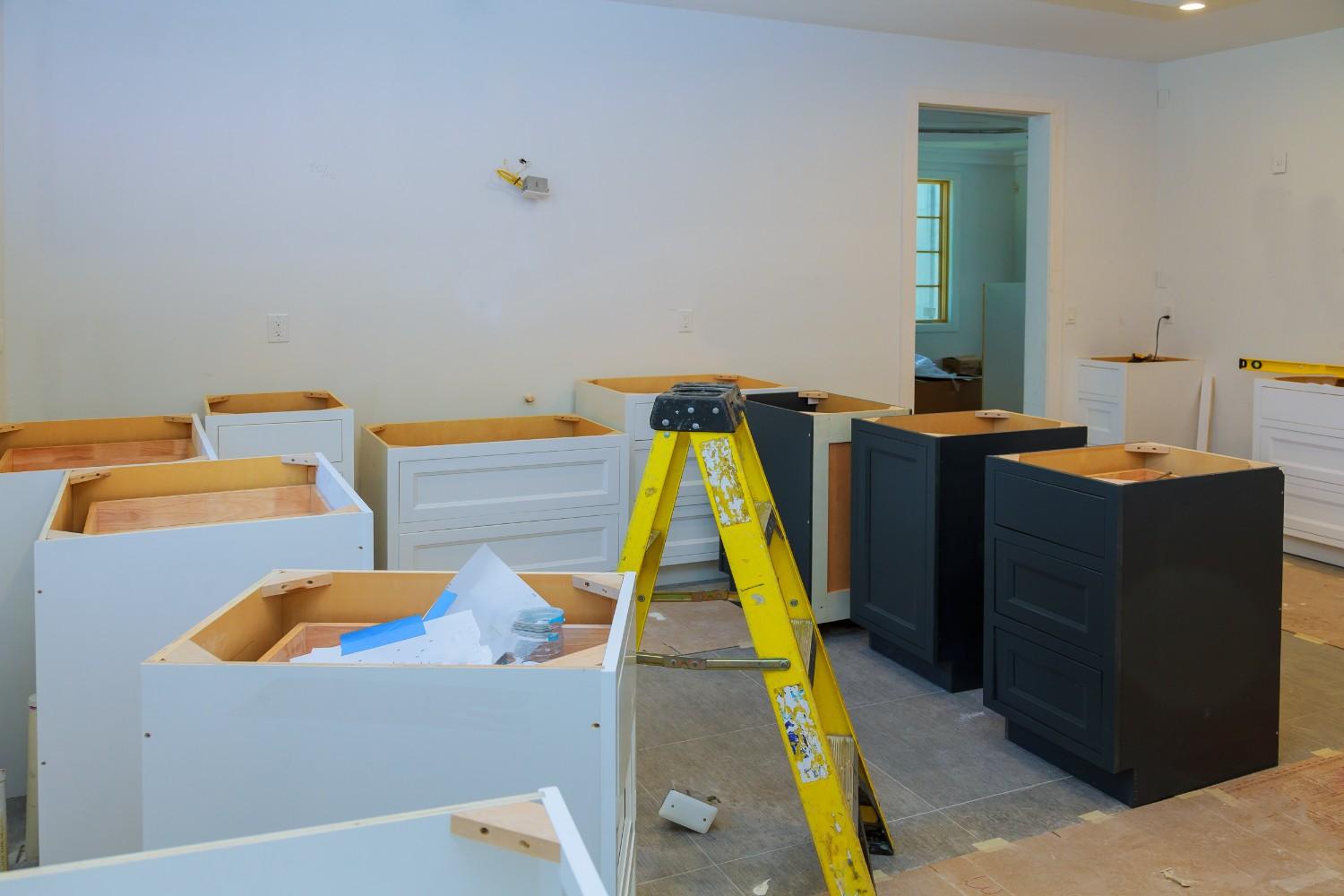
My wife and I hired D&D Home Remodeling for our kitchen remodel, and we’re really happy with how it turned out.
We wanted a kitchen that felt more open and had better storage, and the team helped us figure out a layout that made sense for how we actually use the space.
Mariana, our designer, helped us choose the cabinets, countertops, and finishes without making the whole process feel overwhelming.
There are a lot more decisions involved than we expected! Ilya, our project manager, was easy to talk to and took the time to answer our questions along the way.
The kitchen feels bigger, it’s easier to cook in, and it finally feels like our home.
Glad we went with D&D.


We finished a complete remodeling with D&D home remodeling
We did the kitchen & bathroom and the fire place
We had a great experience with Dan Terrance and the team
We liked to work with the designer Mariana and she helped us with that process and we are static with the results!

We needed a rental ADU built in Sunnyvale to generate extra income before our second child arrived. D&D handled the permits, kept the fixed bid, and finished the construction in four months flat. The unit was rented out within a week of completion. You will not find a more reliable builder in the area.

We needed a rental ADU built in Sunnyvale to generate extra income before our second child arrived. D&D handled the permits, kept the fixed bid, and finished the construction in four months flat. The unit was rented out within a week of completion. You will not find a more reliable builder in the area.

Dan, Joseph, and Ilay did a great job with our bathroom remodel. They were very responsive through the whole process and helped us with everything from the initial design, materials selection all the way through the final finishing details. Their work quality is excellent and our bathroom turned out just how we dreamed it! We highly recommend them and will be doing more projects with their team in the future.

After discovering water damage under our shower in Santa Clara, we needed an immediate bathroom overhaul. D&D pulled the emergency permits, swapped out the tile and vanity, and got our shower back online in less than two weeks. Total lifesaver when you only have one main bath.
Dan, Joseph, and Ilay, did a great job with our bathroom remodel. They were very responsive through the whole process and helped us with everything from the initial design, materials selection all the way through the final finishing details. Their work quality is excellent and our bathroom turned out just how we dreamed it! We highly recommend them and will be doing more projects with their team in the future.

As empty nesters, my husband and I felt ready to upgrade our master bedroom suite, which includes our bedroom, bathroom, and walk-in closet, but after talking to many friends who underwent home remodeling, they described their contractors as people who over promised and under delivered, so we were nervous to commit to this project. After interviewing 5 different contractors, we instantly felt a connection with Dan. His genuine demeanor, work ethic, customer reviews, and construction knowledge caused us to trust him with our vision. He worked with our budget, and he listened to our concerns. But D & D Home Remodeling doesn't end with Dan. As the project manager, Ilay helped with permits, scheduling, and communication. The demolition, tile, and building crews were amazing! Not only were they punctual and cleaned up at the end of their shifts, their workmanship was precise and thoughtful. Shout outs have to go to Terrance, Ricky, and Dante! This crew built my dream master bedroom suite, and it's beautiful! My husband and I felt comfortable asking them questions, and they fixed anything we were concerned about. These guys are top notch, and I was excited with their quick project progress every day. I'm grateful to the designer, Alexandra. Shopping for materials with her was like having an outing with a long-time friend. I will be referring D & D Home Remodeling to everyone who needs construction services in the Bay Area. Thank you D & D Home Remodeling for enhancing our home.

I was very pleased with D & D Home Remodeling. They were very professional and kept me informed in the step by step process. Their prices were competitive with other bids we entertained and they helped us keep within our budget.
Shout out to Dan, Ilay, Mario, Carlos and the rest. Love my new bathroom!
I was very pleased with D & D Home Remodeling. They were very professional and kept me informed in the step by step process. Their prices were competitive with other bids we entertained and they helped us keep within our budget.
Shout out to Dan, Ilay, Mario, Carlos and the rest. Love my new bathroom!




Related Articles
The True Cost Of A Seismic Retrofit In San Jose
San Jose’s Mandatory Soft-Story Retrofit Ordinance: A Complete Guide For Homeowners And Property Owners
Understanding Soft Story Collapse In Earthquakes
People Also Ask
A soft-story retrofit is a structural reinforcement process for buildings, typically multi-unit residential structures, that have a weak first floor. This weak story often features large openings like garages or retail spaces, making it vulnerable to collapse during an earthquake. The retrofit involves adding steel frames, shear walls, or plywood sheathing to the ground floor to strengthen it and distribute seismic forces evenly. In our service area, this is a critical upgrade for older buildings to meet modern safety codes. For specific requirements in your region, you can review our internal article titled Meeting The Deadline For Soft Story Retrofits In Unincorporated Santa Clara County, which outlines key compliance steps. D&D Home Remodeling recommends consulting a licensed structural engineer to assess your property and ensure the retrofit meets local standards.
The most common structural failure associated with soft-story collapse is the buckling or shearing of first-story columns or walls. This occurs when a building has a weak, open ground floor—often used for parking or retail—that lacks adequate lateral bracing. During an earthquake, the rigid upper stories transfer massive horizontal forces down to this flexible first story, which cannot resist the movement. The result is a sudden, pancake-like collapse of the entire structure above. For homeowners in San Jose, this is a critical concern for many older multi-unit buildings. For detailed guidance on protecting your property, please review our internal article titled 'Is A Seismic Retrofit A Worthwhile Investment For Your San Jose Home?' at Is A Seismic Retrofit A Worthwhile Investment For Your San Jose Home?.
Retrofit, in the context of home construction and renovation, refers to the process of adding new features or systems to an existing building that were not installed during its original construction. For a homeowner, this often means upgrading a structure to meet modern safety standards, improve energy efficiency, or adapt to new environmental regulations. A common example is a seismic retrofit, which strengthens a home's foundation and frame to better withstand earthquakes. For specific guidance on this, you can review our internal article titled Soft Story Retrofit Solutions For San Jose’s Historic Neighborhoods. D&D Home Remodeling specializes in such upgrades, ensuring your property is both safer and more valuable.