
We get it. You’re looking at that patchy, water-guzzling lawn in Mountain View and thinking, “There has to be a better way.” The brown spots from the summer heat, the muddy patches the dog tracks through the house, the weekend water bill that makes you wince. Synthetic turf has been dangled in front of homeowners as the magic bullet for years, but the reality of installation is a lot more nuanced than rolling out a green carpet.
The honest truth is that a bad artificial grass installation looks worse than a dying natural lawn. We’ve seen the jobs where the seams are visible, the infill washes away after two rains, and the surface gets so hot you can’t walk on it barefoot. But when it’s done right—with proper base preparation, drainage planning, and material selection—it genuinely transforms a yard. We’ve been doing this work in the Bay Area long enough to know what holds up to our specific climate and what doesn’t.
Key Takeaways
- Proper base compaction is more important than the turf itself. Skip this, and you’ll have dips and wrinkles within a year.
- Not all turf is pet-friendly. You need specific drainage rates and antimicrobial infill if dogs are involved.
- Mountain View’s clay-heavy soil requires extra drainage attention or you’ll end up with a swimming pool.
- DIY installation usually fails at the seams and edge anchoring, which is where most callbacks come from.
- Heat reflection can be mitigated with the right infill choice, but you can’t eliminate it entirely.
The Groundwork Nobody Talks About
Most people focus on the look of the grass—the blade shape, the color variation, the “realistic” factor. And sure, that matters. But we’ve seen $5,000 worth of turf get ruined because someone skimped on the base layer. The sub-base is what separates a lawn that lasts a decade from one that needs replacing in three years.
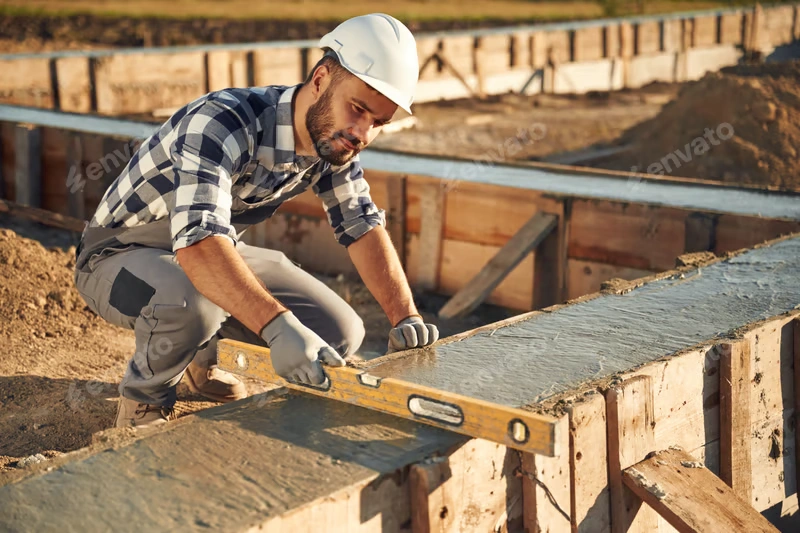
In Mountain View, we deal with expansive clay soil that shifts with moisture. If you just lay turf on top of that, you’ll get waves and bumps after the first heavy rain. The standard approach involves excavating 3-4 inches of soil, laying down a weed barrier, then adding a crushed rock base (usually decomposed granite or Class II road base). That base needs to be compacted with a plate compactor in layers. Not just tamped down with a hand tamper. A plate compactor.
We learned this the hard way on a job near Castro Street years ago. The homeowner wanted to save money by doing the excavation themselves. They dug down, but they didn’t compact properly. Six months later, the turf had sunk in a few spots where the soil settled unevenly. It looked like a lumpy mattress. We had to pull it all up and start over. That’s a mistake you only make once.
Drainage Isn’t Optional
Here’s something that catches a lot of people off guard: synthetic turf is not waterproof. Water needs to go somewhere. If you’ve got a flat yard with no slope, and you’re on that heavy clay we mentioned, water will pool on top of the turf or sit underneath it. That leads to mildew smells and a spongy feel when you walk.
The fix is a perforated drainage system underneath, or at minimum, a proper slope away from the house. For yards that are completely flat, we sometimes install French drains or dry wells. It adds cost, sure. But the alternative is a yard that smells like a wet dog after every foggy morning. And in Mountain View, we get plenty of those.
We also see people forget about drainage around the edges. The perimeter needs to be open enough to let water escape, not sealed tight against concrete or fencing. That’s a detail that gets skipped in a lot of YouTube tutorials.
Pet Turf Is a Different Animal
If you have dogs, you cannot just buy any turf. We’ve had customers call us frustrated because their “pet-friendly” turf from a big box store still smells like urine after a few weeks. The problem is usually the infill. Standard silica sand holds onto odors. You need a zeolite-based or antimicrobial infill that neutralizes ammonia.
Also, drainage rates matter. Pet turf should have at least 30 liters per minute per square meter of drainage capacity. That’s a specific spec you have to check. And you need to hose it down regularly—once a week minimum—to flush the urine through. If you don’t, the smell builds up in the backing material, and no amount of deodorizer fixes that.
We installed turf for a family in the Old Mountain View neighborhood who had two large labs. They didn’t want to deal with muddy paws anymore. We used a higher-grade turf with a polyurethane backing instead of the cheaper latex, because latex breaks down faster with urine exposure. Four years later, it’s still holding up. The key was matching the product to the actual use, not just the look.
The Heat Factor Is Real
This is the one nobody wants to talk about. Synthetic turf gets hot. On a 90-degree day in Mountain View, dark green turf can hit 150 degrees. That’s not a myth. If you have kids or pets that will be on the lawn in the afternoon, this matters.
There are ways to mitigate it. Lighter-colored turf blends reflect more heat. Infill options like coated sand or even cork can reduce surface temperature by 10-15 degrees. But it’s still going to be warmer than natural grass. The honest answer is that you plan your use around it. Morning and evening are fine. Midday barefoot walks? Not so much.
We’ve had customers ask for turf on south-facing yards with no shade. We tell them straight up: you’ll need shade sails or trees, or you’ll regret it in July. Some people go ahead anyway and then call us complaining about the heat. We don’t install turf in those situations without a shade plan anymore. Learned that one the hard way.
Seams and Edges: Where DIY Dies
The most common failure we see in DIY turf jobs is the seam. Joining two pieces of turf so the seam is invisible requires precision cutting, proper adhesive, and a specific seaming tape. If you don’t get the nap direction exactly the same on both pieces, you’ll see a line. If you don’t use enough adhesive, the seam opens up after a season.
Edge anchoring is another weak point. Turf needs to be secured around the perimeter with galvanized stakes every 6 inches, then the edge should be tucked and covered with a border material—bender board, concrete, or stone. If you just staple it down, the edges curl up within months. We’ve seen it happen in yards near Shoreline Park where the wind catches the edge and peels it back like a carpet.
Cost vs. Value: The Real Numbers
Let’s talk money, because that’s usually the deciding factor. A professional synthetic turf installation in Mountain View runs between $12 and $20 per square foot, depending on the complexity of the site and the quality of the turf. For a typical 500-square-foot backyard, you’re looking at $6,000 to $10,000.
That’s not cheap. But compared to maintaining a natural lawn in our climate—water bills that can hit $200 a month in summer, fertilizer, mowing, weed control—the payback period is usually 3-5 years. And you don’t have to think about it again for 15-20 years if it’s installed right.
Here’s a realistic breakdown of what you’re paying for:
| Component | Typical Cost Range | Notes |
|---|---|---|
| Turf material | $2 – $5 per sq ft | Higher cost = better UV protection and softer feel |
| Base materials (rock, gravel) | $1 – $2 per sq ft | Depends on depth needed and soil conditions |
| Labor and excavation | $4 – $8 per sq ft | Most variable cost; complex shapes cost more |
| Infill | $0.50 – $1.50 per sq ft | Antimicrobial or cooling infill costs more |
| Drainage system (if needed) | $500 – $2,000 | Only if yard is flat or has poor drainage |
| Removal of old lawn | $500 – $1,500 | Depends on access and disposal fees |
The table above is based on the real jobs we’ve done in Santa Clara County. Prices have gone up in the last two years because of material costs and labor shortages. If someone quotes you under $10 per square foot for a full install, ask questions. They’re probably skipping the base compaction or using a turf that won’t last two summers.
When Artificial Grass Doesn’t Make Sense
We’re not going to pretend turf is right for everyone. There are situations where it genuinely doesn’t work well. If you have a heavily shaded yard with no direct sunlight, the turf won’t dry out properly after rain or morning dew. You’ll get algae growth and a slippery surface.
If you’re renting, don’t install turf. It’s a permanent modification that won’t add value to a property you don’t own, and the next tenant might hate it.
If you have a very small yard—under 200 square feet—the cost per square foot goes up because of the fixed labor and material minimums. Sometimes a combination of pavers and potted plants is a better use of the space.
And if you’re planning to sell your house in the next two years, think carefully. Some buyers love turf. Some see it as a liability. In Mountain View, where water conservation is becoming more important, it’s usually a positive. But we’ve had listing agents ask us to remove turf because the buyer wanted a garden. So it’s not universally loved.
The Infill Question
Infill is the material brushed into the turf fibers to keep them standing upright and provide cushioning. Without it, the turf lies flat and looks fake. But not all infill is created equal.
Silica sand is cheap and heavy, but it compacts over time and holds heat. It also doesn’t drain as well. We stopped using it for most residential jobs a few years ago.
Envirofill or similar coated sands are better. They’re antimicrobial, don’t compact as much, and reflect more heat. They cost more upfront but last longer.
Rubber crumb is popular on sports fields but we don’t recommend it for homes. It holds heat, it can smell in hot weather, and it migrates out of the turf and into your house. We’ve seen dogs eat it, which is not great.
Cork infill is newer. It’s lightweight, doesn’t get as hot, and is antimicrobial. But it’s expensive and can blow away in windy areas. In Mountain View, where we get those afternoon winds off the bay, cork can be a problem unless the turf has a very dense face weight.
Maintenance Still Exists
The biggest myth about artificial grass is that it’s zero maintenance. It’s not. You still need to:
- Rinse it regularly if you have pets
- Brush the fibers every few weeks to keep them upright
- Remove leaves and debris, or they break down and create organic matter that weeds can grow in
- Top up infill every couple of years as it settles
- Watch for weeds along the edges and seams
We’ve had customers who thought they’d never touch their yard again. Then they come back to us because leaves have decomposed into a thin layer of soil on top of the turf, and weeds are sprouting. A quick annual maintenance visit solves that, but you have to plan for it.
Working With Local Conditions
Mountain View has its own quirks. The soil, as we mentioned, is heavy clay. But we also have microclimates. A yard near Stevens Creek is going to have different drainage needs than one near El Camino Real. The fog line shifts, and areas closer to the bay get more moisture in the air, which means more dew settling on the turf.
We also deal with the occasional freeze. It doesn’t happen often, but when it does, the ground can shift slightly. That’s another reason the base compaction matters. A properly compacted base handles freeze-thaw cycles much better than a loose one.
And then there’s the issue of HOA rules. Some neighborhoods in Mountain View have restrictions on synthetic turf. They might limit the percentage of the yard that can be covered, or require a specific look. We always tell customers to check with their HOA before ordering materials. We’ve had to cancel jobs because the HOA said no after the turf was already on site.
When to Call Us
You can handle some of this yourself. If you have a small, simple yard and you’re handy, you can do the demolition and base prep. But the finishing work—seaming, edge anchoring, infill distribution—is where experience matters. We’ve seen too many DIY jobs that look great for two months and then fall apart.
If you’re in Mountain View and you’re tired of fighting with your lawn, give D&D Home Remodeling a call. We’ll come out, look at your yard, and tell you honestly whether turf makes sense for your specific situation. Sometimes we recommend a hybrid approach—turf in the high-traffic areas, real grass or native plants in the rest. Sometimes we tell people to just fix their irrigation and keep the real lawn. We don’t push turf on everyone.
But when it does make sense, we do it right. The base gets compacted. The drainage gets handled. The seams get matched. And you get a yard that actually works for how you live.
Final Thoughts
Artificial grass is a tool, not a miracle. It solves certain problems—water usage, mud, maintenance time—but it introduces others. Heat, upfront cost, and the fact that it’s not natural. The key is going in with your eyes open, understanding what you’re getting into, and working with people who have done it enough times to know where the pitfalls are.
We’ve been doing this long enough to have strong opinions about base preparation, infill choices, and when to walk away from a job. Those opinions come from real yards, real mistakes, and real solutions. If you’re thinking about turf, take the time to get the foundation right. Everything else follows from that.