


My wife and I hired D&D Home Remodeling for our kitchen remodel, and we’re really happy with how it turned out.
We wanted a kitchen that felt more open and had better storage, and the team helped us figure out a layout that made sense for how we actually use the space.
Mariana, our designer, helped us choose the cabinets, countertops, and finishes without making the whole process feel overwhelming.
There are a lot more decisions involved than we expected! Ilya, our project manager, was easy to talk to and took the time to answer our questions along the way.
The kitchen feels bigger, it’s easier to cook in, and it finally feels like our home.
Glad we went with D&D.


We finished a complete remodeling with D&D home remodeling
We did the kitchen & bathroom and the fire place
We had a great experience with Dan Terrance and the team
We liked to work with the designer Mariana and she helped us with that process and we are static with the results!

We needed a rental ADU built in Sunnyvale to generate extra income before our second child arrived. D&D handled the permits, kept the fixed bid, and finished the construction in four months flat. The unit was rented out within a week of completion. You will not find a more reliable builder in the area.

We needed a rental ADU built in Sunnyvale to generate extra income before our second child arrived. D&D handled the permits, kept the fixed bid, and finished the construction in four months flat. The unit was rented out within a week of completion. You will not find a more reliable builder in the area.

Dan, Joseph, and Ilay did a great job with our bathroom remodel. They were very responsive through the whole process and helped us with everything from the initial design, materials selection all the way through the final finishing details. Their work quality is excellent and our bathroom turned out just how we dreamed it! We highly recommend them and will be doing more projects with their team in the future.

After discovering water damage under our shower in Santa Clara, we needed an immediate bathroom overhaul. D&D pulled the emergency permits, swapped out the tile and vanity, and got our shower back online in less than two weeks. Total lifesaver when you only have one main bath.
Dan, Joseph, and Ilay, did a great job with our bathroom remodel. They were very responsive through the whole process and helped us with everything from the initial design, materials selection all the way through the final finishing details. Their work quality is excellent and our bathroom turned out just how we dreamed it! We highly recommend them and will be doing more projects with their team in the future.

As empty nesters, my husband and I felt ready to upgrade our master bedroom suite, which includes our bedroom, bathroom, and walk-in closet, but after talking to many friends who underwent home remodeling, they described their contractors as people who over promised and under delivered, so we were nervous to commit to this project. After interviewing 5 different contractors, we instantly felt a connection with Dan. His genuine demeanor, work ethic, customer reviews, and construction knowledge caused us to trust him with our vision. He worked with our budget, and he listened to our concerns. But D & D Home Remodeling doesn't end with Dan. As the project manager, Ilay helped with permits, scheduling, and communication. The demolition, tile, and building crews were amazing! Not only were they punctual and cleaned up at the end of their shifts, their workmanship was precise and thoughtful. Shout outs have to go to Terrance, Ricky, and Dante! This crew built my dream master bedroom suite, and it's beautiful! My husband and I felt comfortable asking them questions, and they fixed anything we were concerned about. These guys are top notch, and I was excited with their quick project progress every day. I'm grateful to the designer, Alexandra. Shopping for materials with her was like having an outing with a long-time friend. I will be referring D & D Home Remodeling to everyone who needs construction services in the Bay Area. Thank you D & D Home Remodeling for enhancing our home.

I was very pleased with D & D Home Remodeling. They were very professional and kept me informed in the step by step process. Their prices were competitive with other bids we entertained and they helped us keep within our budget.
Shout out to Dan, Ilay, Mario, Carlos and the rest. Love my new bathroom!
I was very pleased with D & D Home Remodeling. They were very professional and kept me informed in the step by step process. Their prices were competitive with other bids we entertained and they helped us keep within our budget.
Shout out to Dan, Ilay, Mario, Carlos and the rest. Love my new bathroom!

People Also Ask
The rule of 3 is a fundamental design principle that suggests objects or elements arranged in odd numbers, specifically groups of three, are more visually appealing and memorable than even-numbered groupings. This concept creates a sense of balance, harmony, and flow in a landscape. For example, planting three identical shrubs in a triangular pattern or using three different types of stone can create a natural and dynamic focal point. To apply this effectively in your own yard, we recommend reading our internal article titled Applying The Rule Of 3 To Your San Jose Landscape Design. This guide provides specific strategies for implementing the rule of 3 in your San Jose landscape design, helping you achieve a professional and cohesive look.
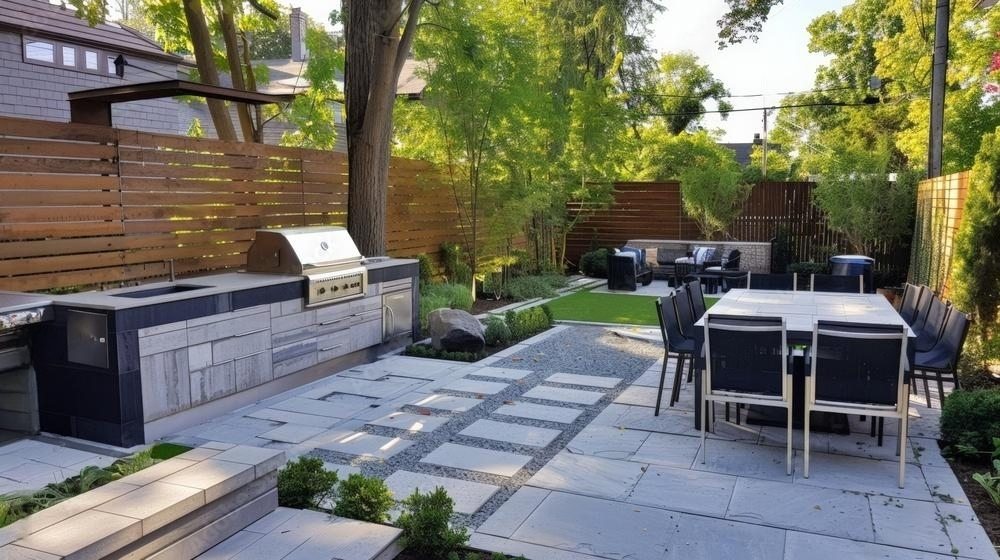
The four primary types of landscape are mountainous, flat, coastal, and urban. Mountainous landscapes feature steep slopes, high elevations, and rocky terrain, often requiring specialized drainage and terracing for stability. Flat landscapes, such as plains or plateaus, have minimal elevation change and are ideal for large-scale planting or open lawns. Coastal landscapes are defined by sandy soil, salt spray, and wind exposure, demanding salt-tolerant plants and erosion control measures. Urban landscapes are man-made environments with hardscapes, limited green space, and infrastructure like patios or retaining walls. For homeowners in San Jose, Santa Clara, or Sunnyvale, understanding these types helps in planning effective grading, irrigation, and plant selection. D&D Home Remodeling can assist with landscape design tailored to your specific terrain.
The main difference between a garden designer and a landscape designer lies in the scope of their work. A garden designer typically focuses on the aesthetic layout of plants, flowers, and softscaping elements to create a visually pleasing outdoor space. In contrast, a landscape designer has a broader skill set that includes hardscaping, grading, drainage, and structural elements like patios or retaining walls. For a comprehensive breakdown of these roles and how to choose the right professional for your specific project, we recommend reviewing our internal article titled Landscaper Vs. Landscape Designer: Choosing The Right Pro For Your Home. This resource provides clear guidance on matching the expert to your home's needs, whether you are in San Jose or Santa Clara.
A comprehensive landscaping service typically includes design, installation, and maintenance of outdoor spaces. For the initial phase, services cover site assessment, soil testing, and creating a layout plan that integrates plants, hardscapes like patios or walkways, and irrigation systems. Installation involves planting trees, shrubs, and flowers, laying sod or seed, and constructing features such as retaining walls or water elements. Ongoing maintenance includes mowing, pruning, weeding, fertilizing, and pest control. For homeowners in drought-prone areas, modern landscaping often shifts to xeriscaping with drought-tolerant plants and efficient drip irrigation. For more insights on transforming your yard, you can read our internal article titled So Your Lawn Looks Like a Crispy Taco? Let's Build a Drought-Tolerant Paradise Instead. D&D Home Remodeling emphasizes a tailored approach to ensure your landscape is both functional and sustainable.